Are guests coming to your restaurant for the dessert?
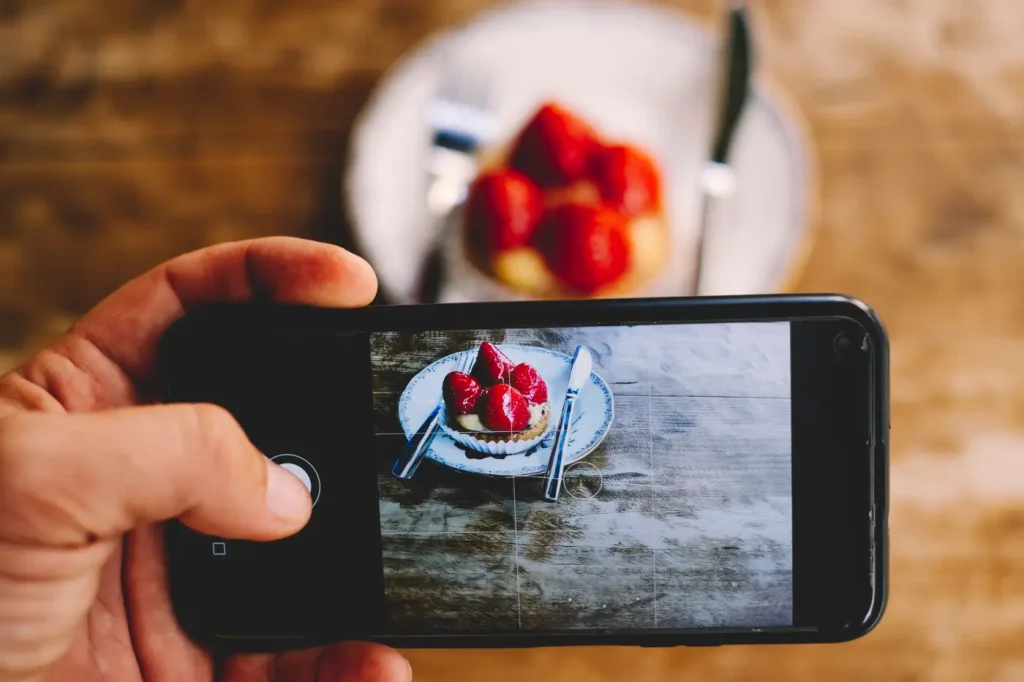
Restaurant dessert is often viewed as the final course in a menu. If observed in sequence, this is indeed the case. However, when looked at individually, the preparation of dessert is a moment where technique, aesthetics, and speed of service meet.
Unlike monoporcions, individual portions of dessert that are fully prepared in advance, restaurant dessert is assembled from pre-prepared components only upon order. This is why each element must have a clear function and the entire plate must be executable in the rhythm of a busy professional kitchen.
What makes a good restaurant dessert?
A good dessert is based on contrasts but appears harmonious. The key is not in the number of elements but in ensuring that each contributes to texture, flavor, or visual impression. In short, each element on the plate must have its function.
- Complexity of textures: Combines a base of dough (sponge, shortcrust, puff pastry), a light cream (parfait, mousse), crispy elements (crunch, crumble), and liquid elements (sauces).
- Temperature contrast: Combines warm elements (warm soufflé or sauce) with cold ones (ice cream or sorbet).
- Restaurant sauces: The plate must contain coulis, English cream (crème anglaise), or reductions.
- Immediate consumption: Contains components that quickly lose form at room temperature (such as ice cream or foams).
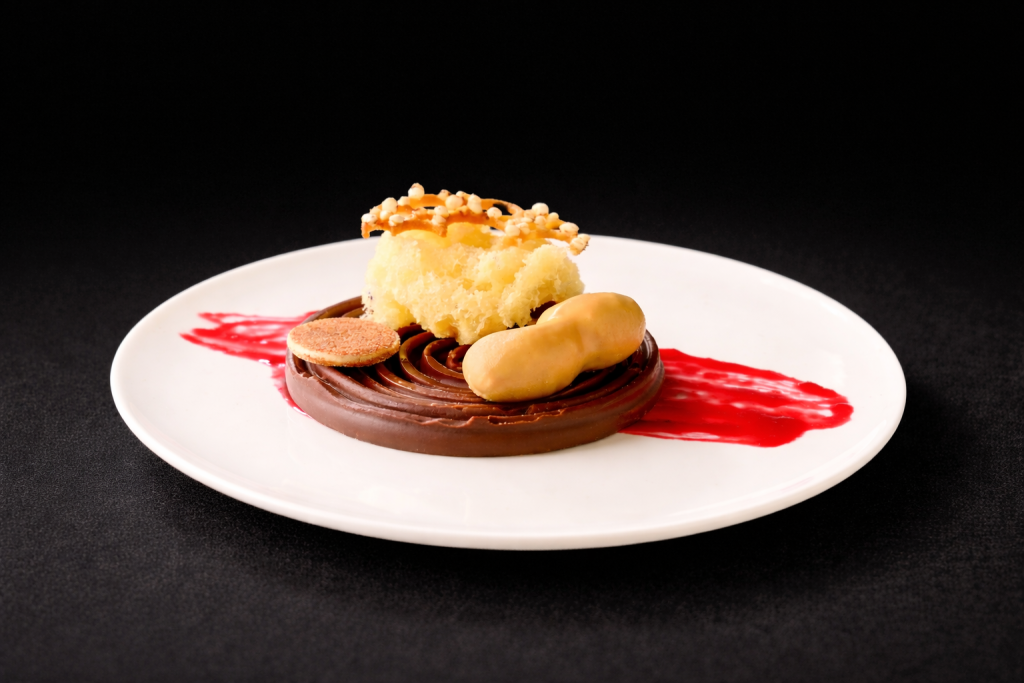
- Aesthetics and composition: Focus is on the design of the plate through height, lines, colors, and balance of empty space.
- Main flavor: One dominant flavor (e.g., chocolate) is accompanied by contrasting accents (e.g., acidity of citrus).
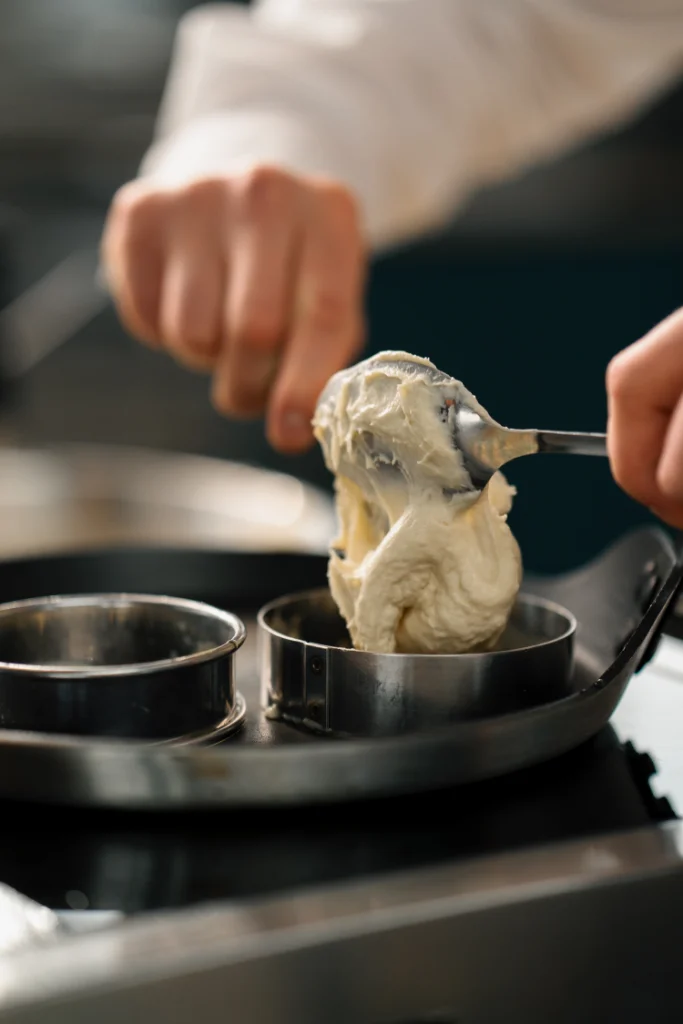
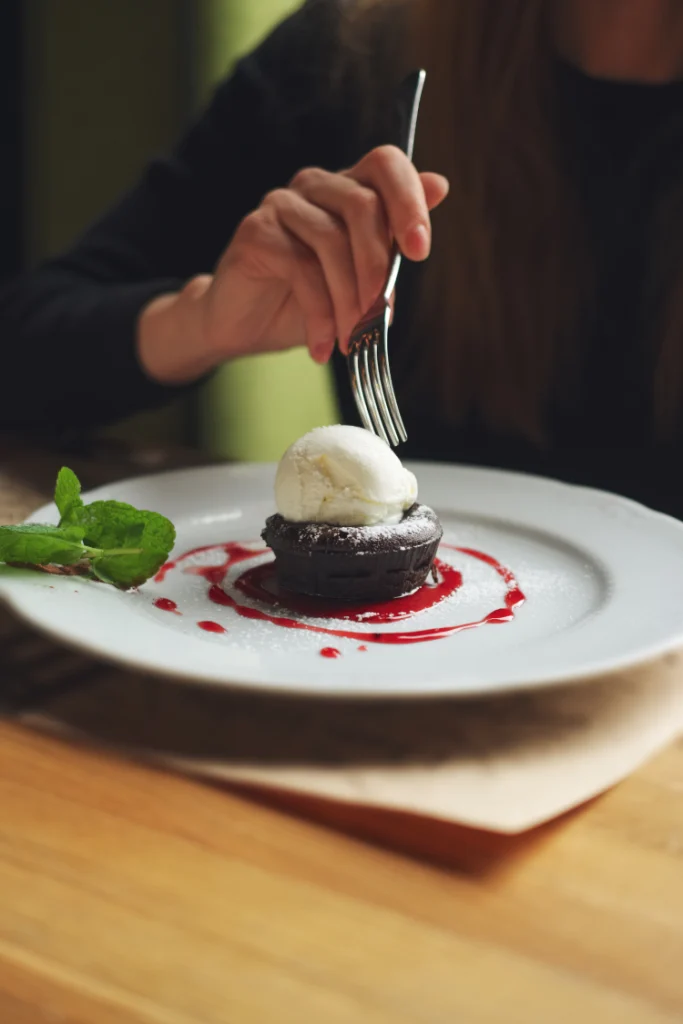
Elements that work together
A restaurant dessert is most often built through several clearly defined components:
- The central part of the dessert is its main component, which quantitatively makes up the majority.
- Tart, soufflé, layered cake, cream, or warm sponge.
- The secondary component complements the main element.
- Often a quenelle (scoop) of ice cream, sorbet, mousse, or cream.
- The textural element brings crunch and rhythm.
- Tuile, crunch, crumble, nuts, dehydrated fruit, or meringue shells.
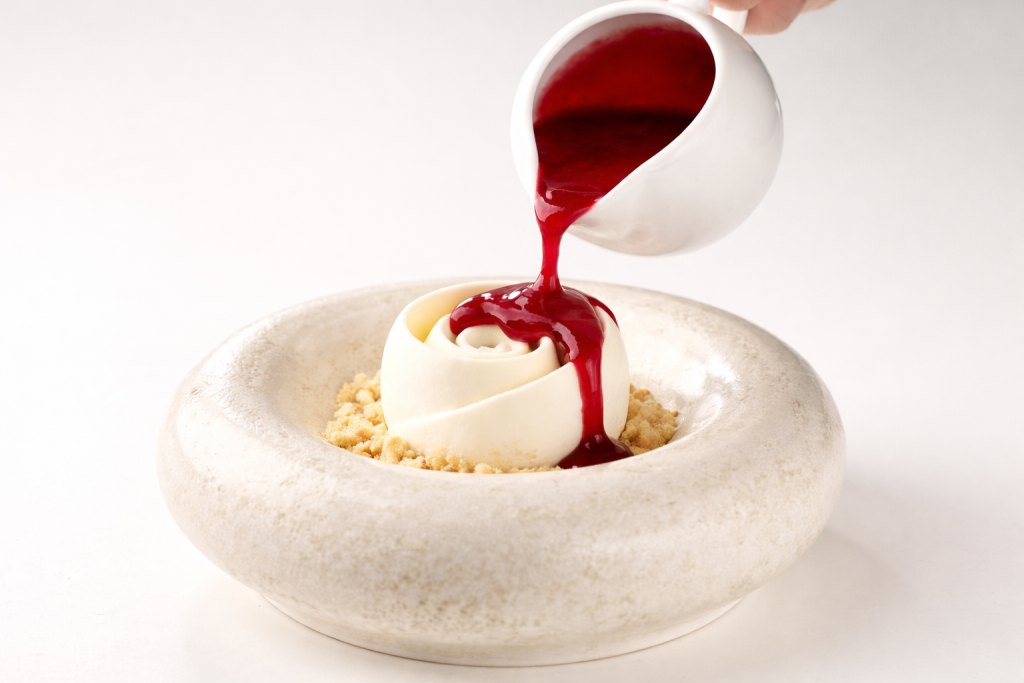
- The sauce connects the plate as a whole, adds juiciness, and balances sweetness.
- Coulis, crème anglaise, reduction, or ganache.
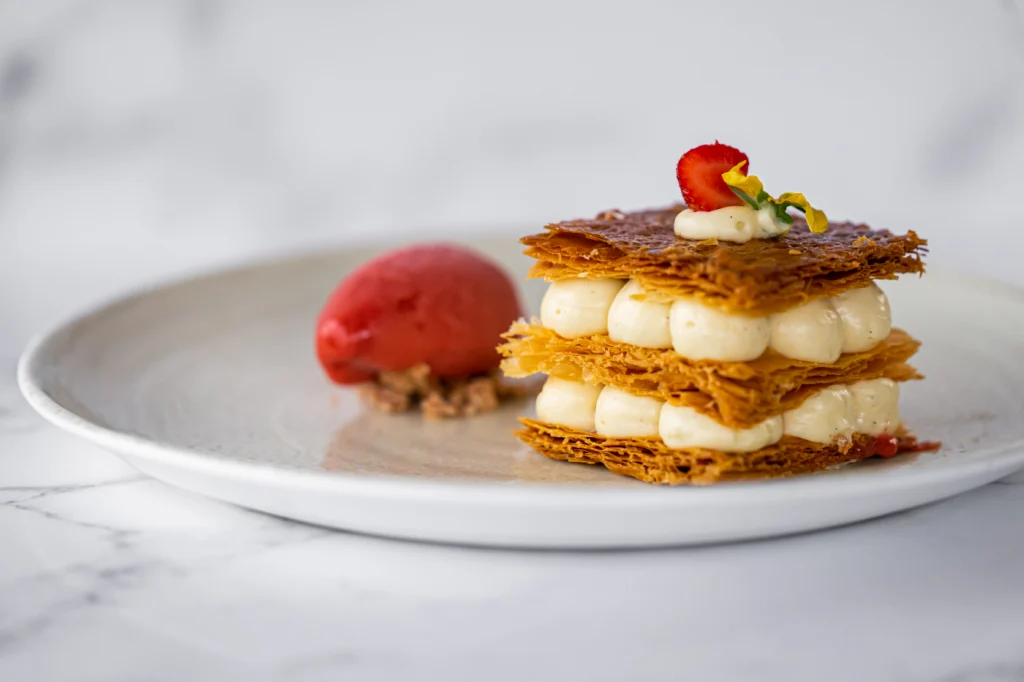
Balance of flavors without excess
A dessert after the main course should be intense but not heavy. That’s why sweetness is increasingly controlled with less sweet creams, fruit components and careful dosing of sugar.
The acidity of citrus, raspberries or currants works particularly well with chocolate, caramel and nuts as it cuts through fat and refreshes the palate. Dark chocolate, coffee, cocoa and a pinch of fleur de sel introduce bitterness and complexity, especially in desserts with caramel.
A good test is simple: if you remove one component, it should be clear what has changed. If nothing changes, the element is likely superfluous.
Composition that guides the eye
The plate is a space, not a canvas to fill. The main element must have a clear focal point and is most often placed centrally, dominating in height and volume. The guest should understand the main element of the dessert at first glance.
When assembling, it’s worth considering a few rules:
- An odd number of elements, such as three or five, often appears more natural and visually interesting.
- Height creates dynamics, but decorations must be stable and edible.
- Lines of sauce, crumbs, and fruit elements can direct the gaze and movement through the dessert.
- Leave about 30 to 40 percent of the plate empty. Negative space gives the dessert elegance, readability and room to stand out.
The best plating is not necessarily the most complicated. It is precise, clean, and recognizable – attractive enough to be memorable but functional for the guest and service.
A la carte: dessert under pressure
In a restaurant kitchen, aesthetics must follow operational logic. A dessert that looks great but takes five minutes to assemble will struggle to survive during peak service.
The goal is to finish the plate in 60 to 90 seconds so that the ice cream doesn’t melt and the warm part doesn’t cool down. This means that mise en place must be organized down to the details: sauces in bottles, crispy elements protected from moisture, decorations within reach, ice cream ready for quick shaping, and all tools in the same place during each service.
The temperature of the plate is also part of the recipe. An overly cold plate can harden the sauce and change the texture of the cream, while an overly warm plate accelerates the melting of ice cream and sorbet. Room temperature is usually a safe starting point, unless the dessert concept calls for otherwise.
Advanced techniques of modern restaurant desserts
Contemporary restaurant desserts open up space for creativity, but technique must always serve the flavor and experience of the guest.
- Molecular gastronomy: Use of gels (agar-agar), siphon foams (espumas), and faux caviar made from fruit juices.
- Dehydration: Drying fruits, meringue shells, or biscuits to achieve intense flavor and crispy texture.
- Smoking: Serving desserts under a glass dome filled with smoke from apple wood or citrus herbs for a wow effect.
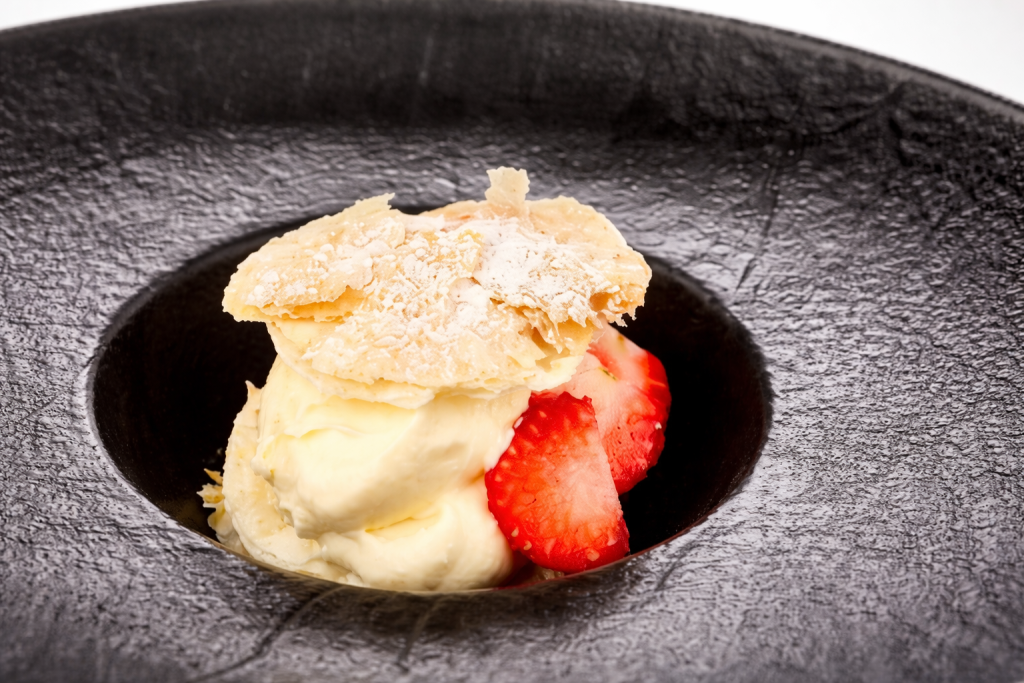
- Micro-biscuits (sponge cake made in the microwave): Sponge from a siphon cooked in the microwave for 30 seconds, creating an extremely airy texture.
Regardless of the technique, the final question remains the same: does it bring better flavor, texture, or experience to the dessert? If the answer is yes, it has a place on the plate, and the dessert can become the reason guests visit your restaurant.