Dehydrated soups and sauces for a more cost-effective menu

In a professional kitchen, profitability depends not only on the purchase price of ingredients but also on how effectively we use them. An ingredient that has multiple applications on the menu can simplify procurement planning, reduce the need for various stocks, and streamline preparation.
A good example is dehydrated mixtures for soups and sauces. In addition to preparing the dishes they are primarily intended for (soups and sauces), they can also serve as a base for other recipes, an addition to spice mixtures, or a way to enhance flavor.
Profitability starts with good planning
One way to manage the menu more efficiently is to use the same ingredient in multiple different dishes. This increases the possibility of utilizing stocks, and the kitchen does not have to prepare a separate base for each menu item.
Dehydrated mixtures can be useful precisely because of the ability to dose according to the required amount. Instead of preparing a large quantity of sauce in advance, it is possible to prepare a smaller amount for each shift or service.
For a true assessment of profitability, it is important to calculate the cost of a finished portion, rather than just comparing the price of the packaging. Include the amount of product used, other ingredients, utilization, waste, and preparation time in the calculation.

Five ways to use dehydrated mixtures more versatilely
1. Spice mixtures for sides
Appropriate dehydrated vegetable mixtures can be finely ground in a spice mill and used as an addition to homemade chips, fries, or roasted vegetables.
This fine powder can also be served as a finishing touch to risotto.
Advantage for the kitchen
One mixture can be used for multiple sides, with simpler dosing and a recognizable flavor profile.
2. Flavored butter for multiple dishes
A dehydrated mixture of tomato and basil sauce or herbs can be mixed into softened unsalted butter. Once the ingredients are combined and the butter cools, shape it into a log and cut into portions.
Use it with steaks, fish, roasted vegetables, or warm bread.
Advantage for the kitchen
The same prepared addition can be used with multiple main dishes, and the predetermined weight makes portion control easier.

3. Crunchy crumbs and savory pastries
Appropriate dehydrated mixtures can be added to bread or panko crumbs for baked chicken and vegetables.
Mixtures with dehydrated vegetables can also be tried in savory muffins, crackers, and kneaded into quick bread, with adjustments to the amount of salt and liquid in the recipe.
Advantage for the kitchen
It is possible to develop more products for different purposes without the need for a large number of separate spice mixtures.
4. Base for stews and long-cooked dishes
Dehydrated soups and sauces can serve as a starting point for preparing stews, casseroles, and meat dishes.
With fresh ingredients and spice adjustments, they allow for quicker achievement of the desired flavor profile, without the need to prepare each base from scratch.
Advantage for the kitchen
Fewer preparation steps and easier maintenance of consistent flavor.
5. From soup to sauce
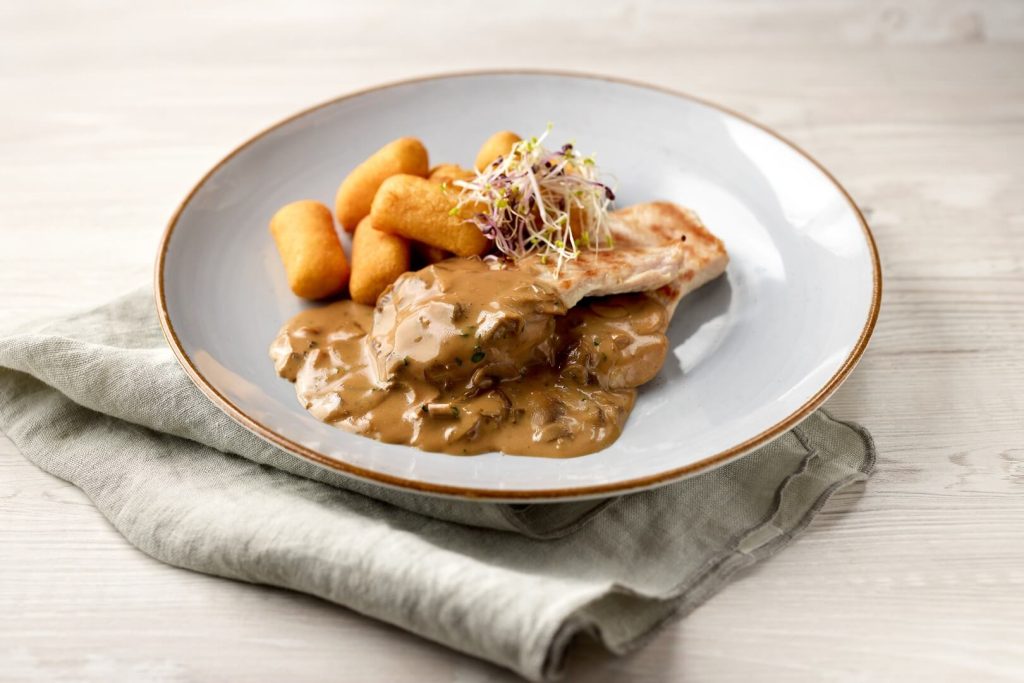
An appropriate cream soup can be used as a base for a sauce with pasta, vegetables, or meat. The thickness can be adjusted according to the recipe, and the flavor can be complemented with fresh ingredients.
For example, a mushroom base can connect soup, pasta sauce, and a side dish for a meat dish.
Advantage for the kitchen
One product gains multiple functions, and the preparation can be adjusted to the number of orders.
How to check if such an application brings real savings?
Before introducing a new recipe, compare its cost with the existing preparation. Pay attention to four things:
- Cost per portion
- How much do all the ingredients in the finished dish cost?
- Preparation time
- How much labor does preparing from scratch require, and how much does using a ready-made base require?
- Waste
- How much prepared sauce or soup goes unused?
- Repeatability
- Can each team member prepare the dish of the same quality and weight?
The value of dehydrated mixtures lies in the fact that, with good planning, they can facilitate work organization, standardization of recipes, and utilization of ingredients.
The most cost-effective ingredient is not necessarily the one with the lowest purchase price, but the one that delivers good results with controlled costs and minimal waste.