Types of dough in pastry: basic classification
From homemade noodles and pulled dough to tarts and éclairs, different types of dough require different preparation methods. The ratio of ingredients, the way the dough is kneaded, and its handling determine its structure, texture, and application.
What are the basic types of dough and how do they differ? We bring you an overview of the most important terms in pastry making, along with examples of their application prepared by Podravka chef Marija Bošnjak.
Basic types of dough and their applications
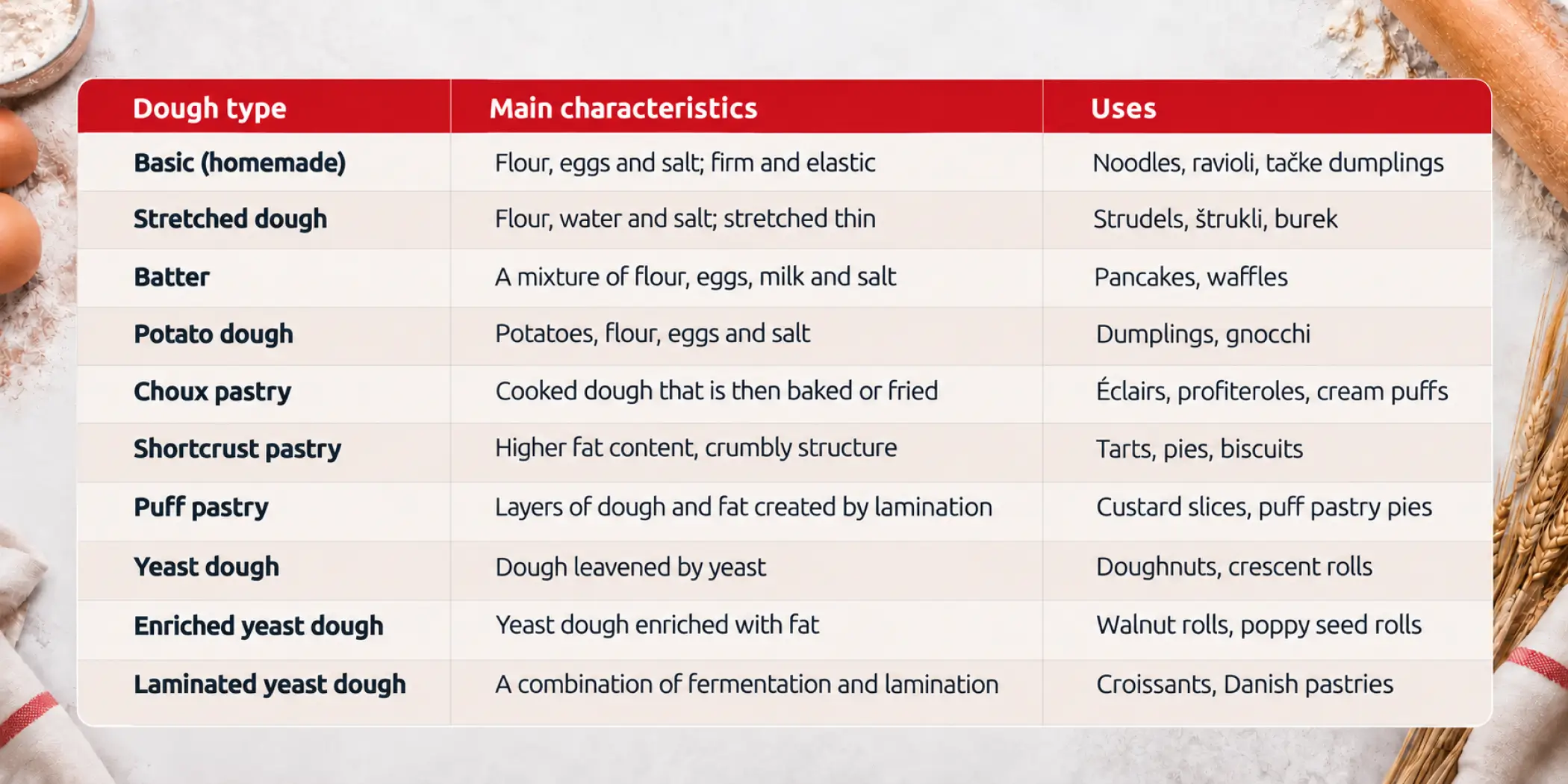
Below we present the characteristics and tips for preparing simple, water-based, liquid, potato, crispy, and shortcrust dough. Puff and yeast dough, which require additional processes such as laminating and fermentation, are discussed in a separate guide.
Five basic types of dough: what is important in preparation?
1. Simple (homemade) dough
It is made from flour, eggs, and salt. The basic ratio in relation to the amount of flour is 55% eggs and 2% salt. The dough is kneaded to a uniform, elastic structure, and it needs to rest before rolling to make it easier to shape.
Application: homemade noodles, ravioli and dumplings
In the recipe: Pasta with Lino Lada Milk

2. Water-based pulled dough
The main ingredients are flour, water, and salt, with the amount of water being approximately 55–65% of the flour mass.
For a good result, it is necessary to develop the elasticity of the dough and allow it enough resting time before stretching. Well-prepared dough can be rolled out into very thin sheets without tearing.
Application: strudels, štrukli, baklava and burek
3. Liquid dough
It is made from flour, eggs, milk, and salt. Depending on the type of dish, cocoa, vanilla, lemon zest, or spinach can be added to the mixture.
It is important to achieve the right consistency and a lump-free mixture. A short resting period before baking allows for better hydration of the flour.
Application: sweet and savory pancakes and waffles

4. Potato dough
The base consists of cooked potatoes, flour, eggs, and salt. The amount of flour needs to be adjusted to the moisture of the potatoes.
Tip: Use starchy potatoes, drain them well, and avoid prolonged kneading. Too much flour or intense handling can result in hard and chewy dough.
Application: gnocchi and dumplings filled with plums, apricots or sweet fillings
5. Crispy dough (choux)
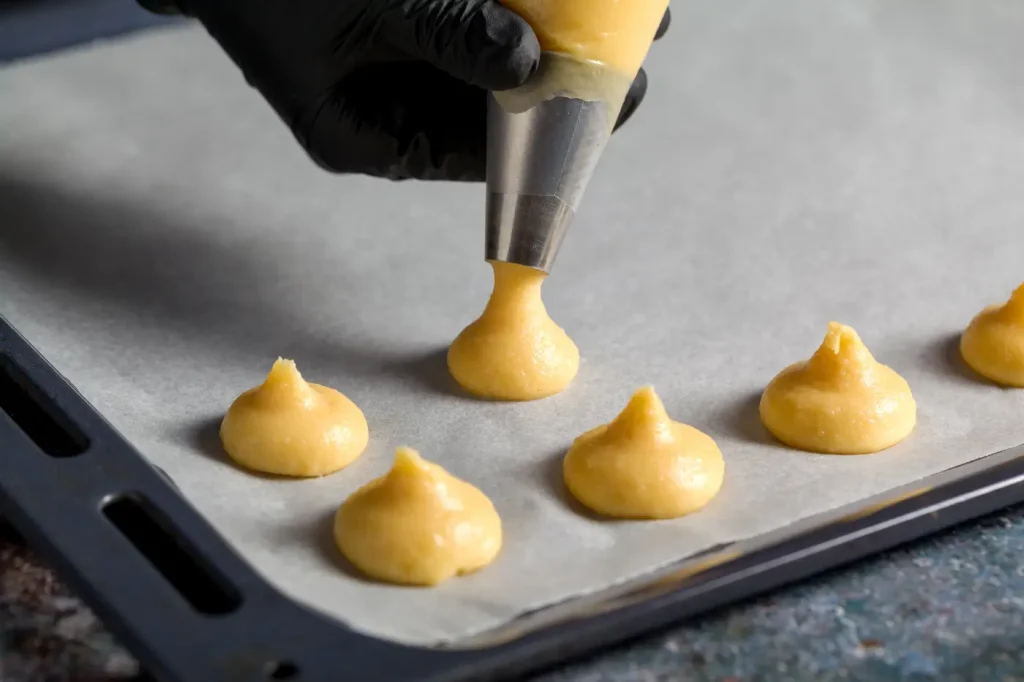
Unlike the previous types, crispy or cooked-baked dough is prepared in two phases: by cooking the base mixture and then baking or frying.
The liquid and fat are first heated, then flour is added, and the mixture is cooked while stirring. After partial cooling, eggs are gradually added.
During baking, steam lifts the dough and creates a characteristic cavity suitable for filling.
Tip: Be careful with the amount of eggs and the consistency of the dough. Too thin dough struggles to hold its shape, while underbaked dough can collapse after being removed from the oven.
Application: éclairs, profiteroles and cream puffs
Shortcrust pastry: how to choose the right type we need
Shortcrust pastry is characterized by a high fat content that limits gluten development and gives a characteristic crumbly structure.
For basic sweet shortcrust pastry, a ratio of 3:2:1 is often used, meaning three parts flour, two parts fat, and one part sugar. However, the ratios and techniques vary depending on the intended use of the dough.
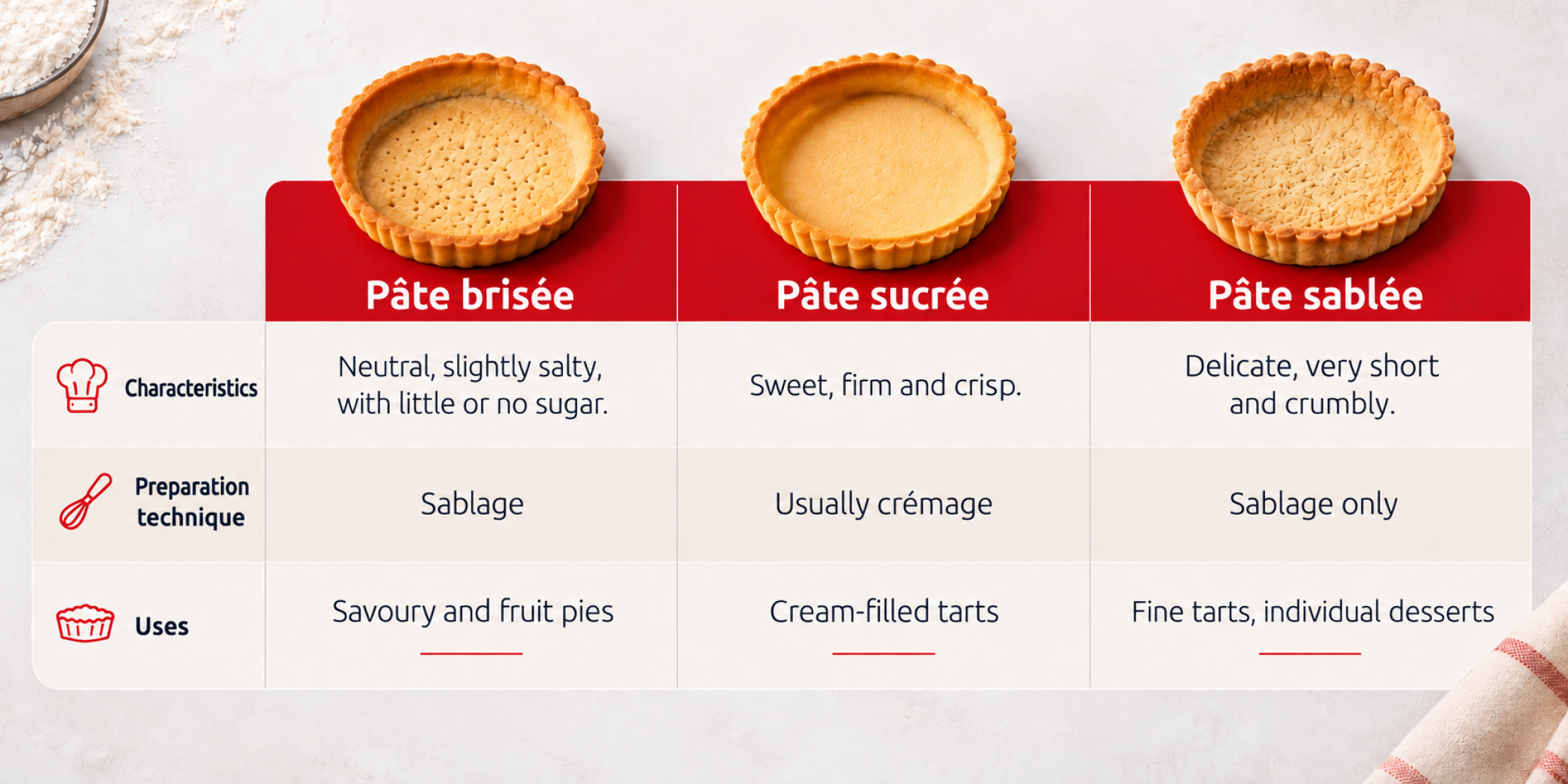
In French pastry making, three main types of shortcrust pastry are distinguished, differing in the ratio of ingredients (especially butter and sugar) and the method of preparation.
1. Pâte brisée (classic shortcrust pastry)
It has a neutral and slightly salty taste. It contains very little or no sugar. It is extremely versatile and crumbly.
Best for: Savory dishes like Quiche Lorraine and savory pies, but it is also used for classic fruit pies (like American apple pie) where a neutral base is desired to highlight the sweetness of the filling.
Method: Butter is rubbed into the flour (the sablage technique) to achieve a breadcrumb texture before adding cold water.
2. Pâte sucrée (sweet shortcrust pastry)
It is a sweet, rich, and firmer dough. It contains a higher proportion of sugar (often granulated sugar) and eggs, which gives it a texture similar to a crispy cookie after baking. It is firmer than pâte sablée and easier to roll out.
Best for: Bases for tarts with moist fillings, such as lemon cream tart (Tarte au citron) or fruit tarts with pastry cream (Crème pâtissière).
Method: It is most often made using the crémage technique – room temperature butter is creamed with sugar before adding eggs and flour.
3. Pâte sablée (sandy shortcrust pastry)
It is the most delicate, crumbliest, and richest of the three doughs. It literally melts in the mouth and has a tender, crumbly texture similar to sand. Almond flour is often added for extra flavor and texture.
Best for: Making bases for individual portions (individual desserts), fine French tarts, miniature fruit baskets (mignardises), and gourmet chocolate tarts.
Method: It is made exclusively using the sablage technique – cold butter is rubbed into flour and powdered sugar until a sandy texture is achieved.
For bases that need to hold their shape, such as tarts with creamy fillings, pâte sucrée is often chosen. For a more delicate, extremely crumbly texture, pâte sablée is suitable, while pâte brisée is used when a more neutral base is desired.
In the recipe: Čokolino tart
What about honey shortcrust pastry?
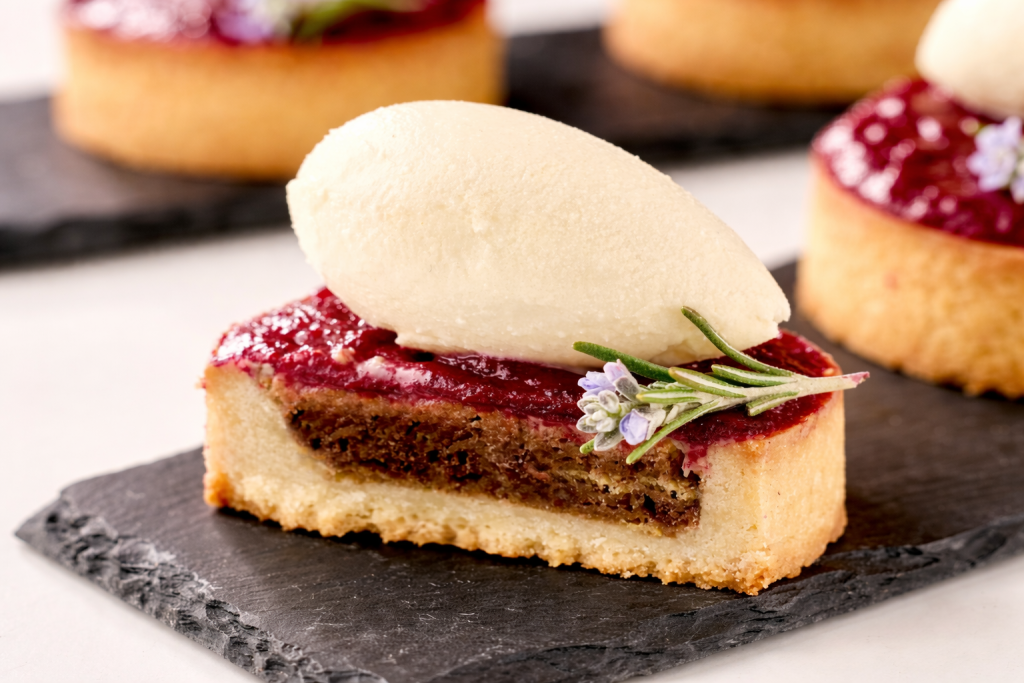
Honey shortcrust pastry contains honey and often baking soda in addition to the basic ingredients.
Honey affects the flavor, color, and texture of the finished product. Due to its ability to attract and retain moisture, it contributes to softening the cake during storage and prolonging its freshness.
Baking soda reacts with acidic ingredients, contributing to the leavening of the dough and the development of color during baking.
How to choose the right dough
The choice of dough depends on the desired texture and method of preparation of the finished product. For thin strudels, use water-based pulled dough, for dumplings potato dough, and for hollow pastries intended for filling, choux dough.
When it comes to tarts and pies, choosing the appropriate type of shortcrust pastry is important, depending on the filling and the desired structure of the base.
And when the preparation requires a layered or fermented structure, it is necessary to opt for puff or yeast dough.
Literature: Šošić, Ružica and Bešlić, Saša (2023), Pastry Making 1, Osijek.