Individual desserts that catch the eye and encourage orders
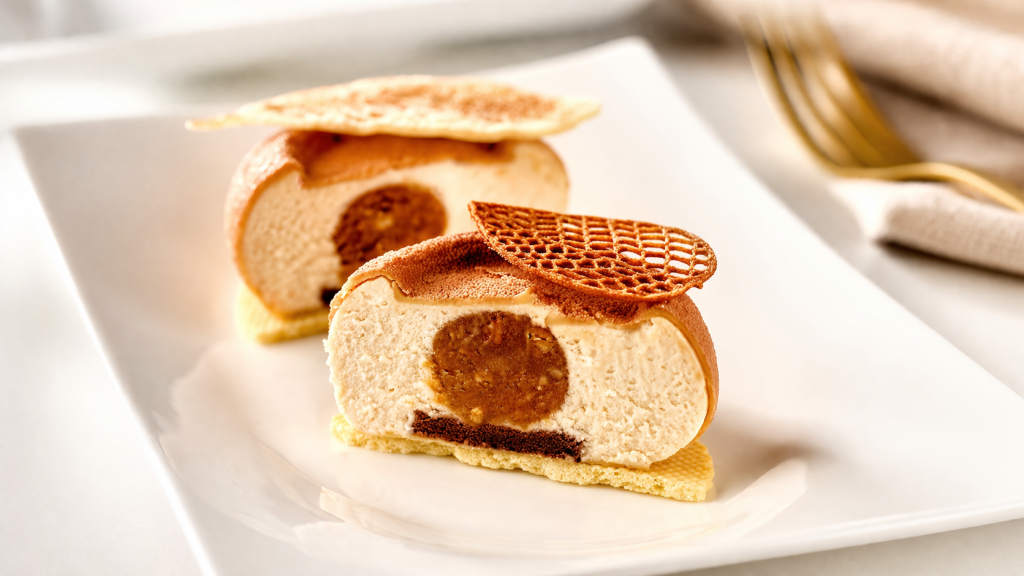
Individual desserts, also known as single portions, are prepared as a complete dessert for one person. In a small format, they combine layers, textures, precise execution and an attractive final appearance. That makes them one of the most recognizable formats in modern pastry making.
Part of the name comes from the Latin word mono, which means “one” or “only,” and with the addition of the word portion, it clearly indicates that it is intended for one person. However, a single portion is not just a smaller cake. It is a carefully designed dessert in which each component has its function: from a crispy base to a creamy interior, a fruity insert and the final glaze. The single portion is the pinnacle of modern pastry making.
Creating layers of experience
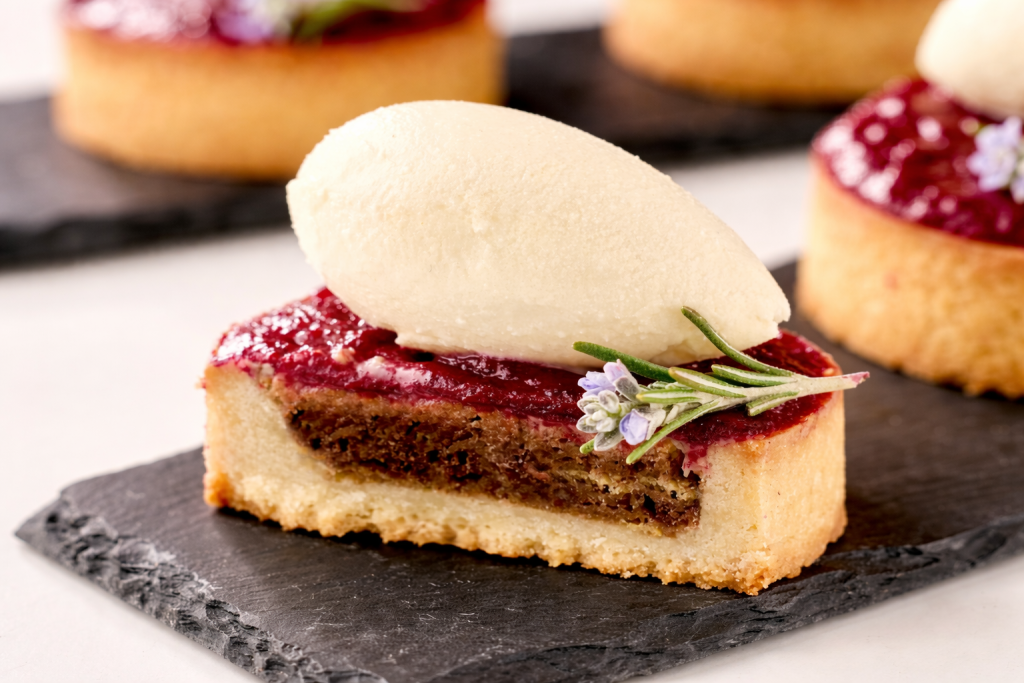
A good single portion is built through contrasts. The crispy base provides structure, mousse or parfait brings lightness and the core enhances flavor and creates the surprise factor upon cutting.
The most common components include:
- Base I: provides stability to the single portion, usually a thin disk of shortcrust pastry (the French term for this type of pastry is pâte sablée).
- Base II (dough): sponge cake, shortcrust pastry, or a crispy crumble layer is used.
- Filling (interior): various creams, parfaits, mousses.
- Insert (center): fruit gel, chocolate, or creamy insert.
- Final glaze: shiny mirror glaze, chocolate glaze, or velvet effect spray.
- Decoration: the finishing element, which can include chocolate decorations, decorations made of thin and crispy pastry, edible gold, fresh fruit or microgreens.
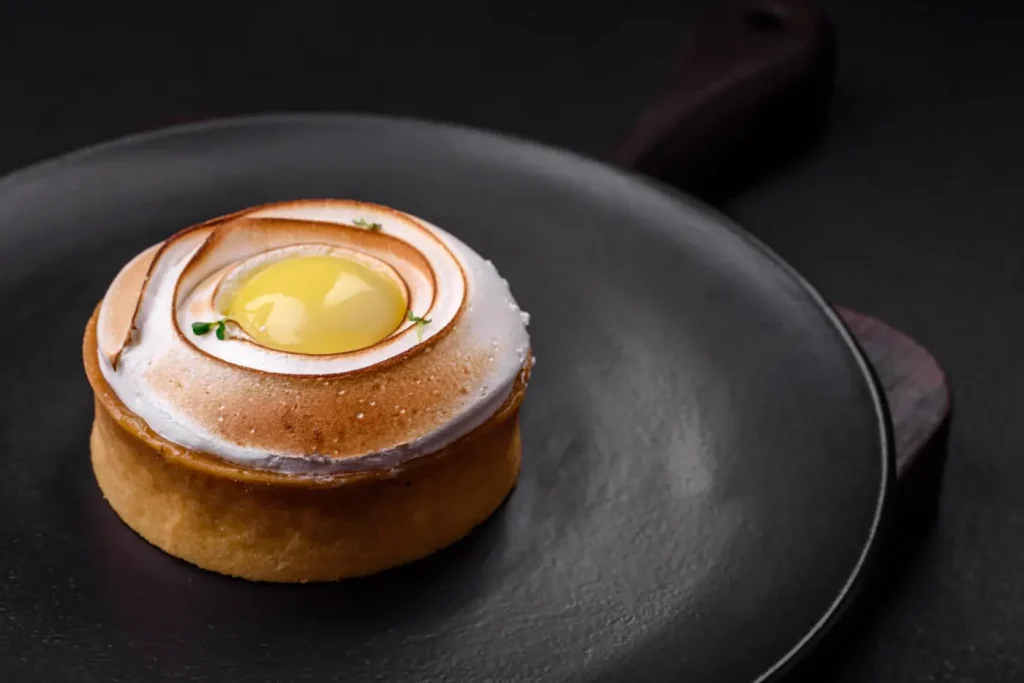
The goal is not to have as many layers as possible, but to build a clear flavor. For example, a dark chocolate single portion can gain freshness through a cherry insert, textural contrast through almond crumble, and a finishing note through a thin chocolate decoration.
Most common shapes and techniques
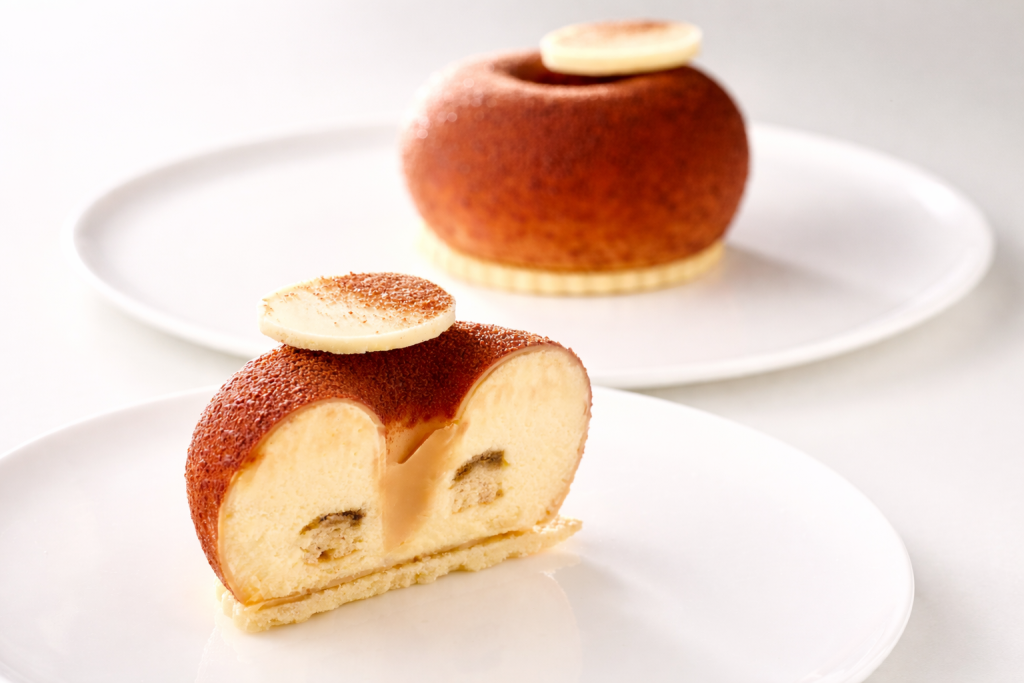
Single portions are made inside out. The insert is prepared and frozen first, then incorporated into the mousse or creamy base and the dessert is shaped in a silicone mold. After stabilization and freezing, it is removed from the mold, glazed and decorated.
Silicone molds open up a vast space for creativity: from clean geometric forms and elegant domes to spheres, irregular organic shapes and pronounced 3D textures. Their greatest advantage is not just aesthetics, but repeatability. Each piece can have the same shape and volume.
When making decorations, tempering chocolate is especially important. Well-tempered chocolate has shine, firmness, and a characteristic snap, while thin elements remain stable during handling and serving.
Advantages in hospitality and production
Single portions combine creative freedom with practical advantages for patisseries, hotels, restaurants and catering.
- Each guest receives the same amount and aesthetically perfectly shaped product.
- Serving is faster as there is no cutting of whole cakes and additional portion shaping.
- Production can be planned in batches, with freezing and storage in a shock chamber.
- It is easy to offer a variety of flavors, seasonal combinations, and different price ranges in the display case.
- The smaller format makes it easier for guests to try more desserts, which can increase interest in a diverse offering.
- Visually striking presentation attracts attention in the display case, as well as in social media content.
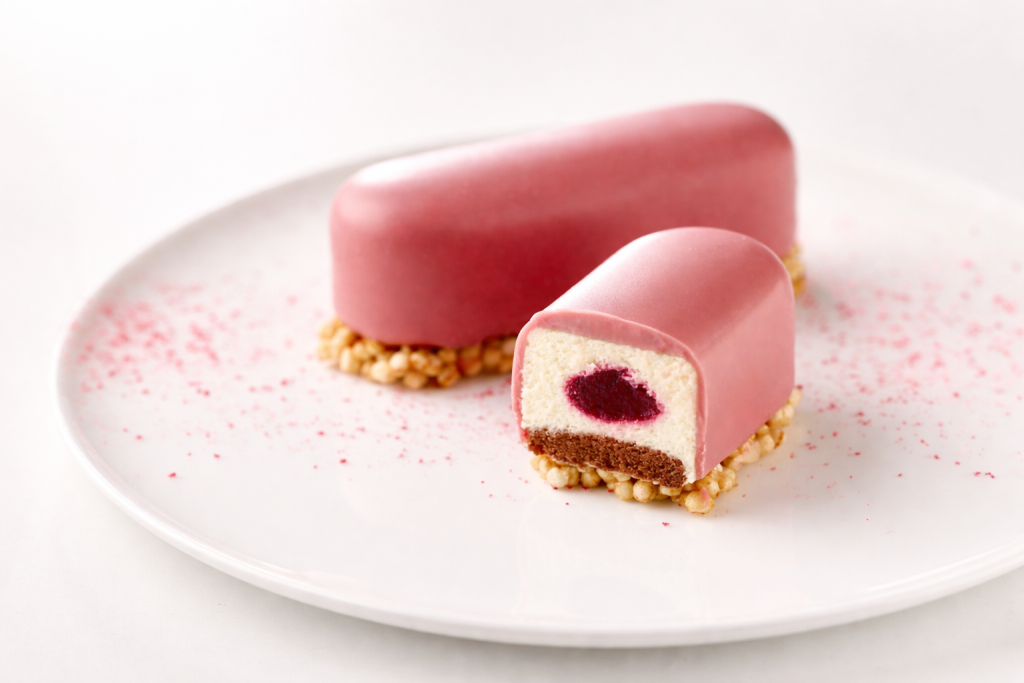
The best single portions are easy to read: they have a recognizable shape, a clean finish and one or two clear visual highlights. When cut, the layers reveal the technique. When tasted, they confirm why they are there.