Types of dough in pastry: puff pastry and yeast dough
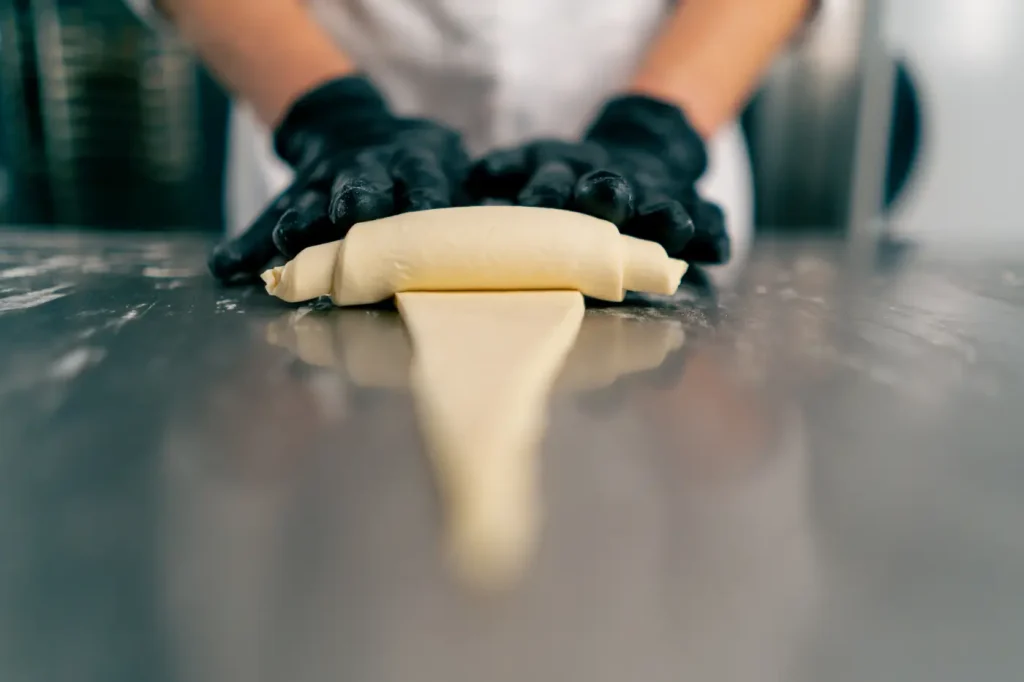
In the first part of the guide on types of dough, chef Marija Bošnjak presented the basic classification of dough, their characteristics, and application in professional kitchens. She particularly focused on the preparation of shortcrust pastry and the differences among its types.
Next, we will discuss doughs that require additional control of temperature, time, and processing methods. We provide an overview of puff pastry, yeast dough, short yeast dough and yeast puff pastry, along with explanations of the lamination and fermentation processes. As always, we also offer practical tips for achieving consistent results.
Puff pastry: how are the characteristic layers formed
Puff pastry is made from a basic water dough and fat. It acquires its characteristic structure through the process of lamination, which involves repeated rolling and folding of the dough.
During baking, the water from the dough and fat turns into steam, which separates the layers and allows them to rise. This creates a light, crispy, and layered structure.
Three methods of preparing puff pastry
We distinguish three basic methods of preparation, depending on how the fat is added and how the layers are formed.
1. Classic puff pastry (German method)
The basic dough wraps around the fat, followed by rolling and folding. By repeating the process, thin, evenly distributed layers are created.
2. Reverse puff pastry (French method)
The fat wraps around the basic dough. This method requires careful control of the temperature and consistency of the fat to ensure the dough can be rolled properly.
3. Quick puff pastry (Dutch method)
The fat is added in pieces to the flour, and layers are formed through subsequent rolling and folding.
It is important to note that the names of the methods may vary among pastry schools and professional literature.
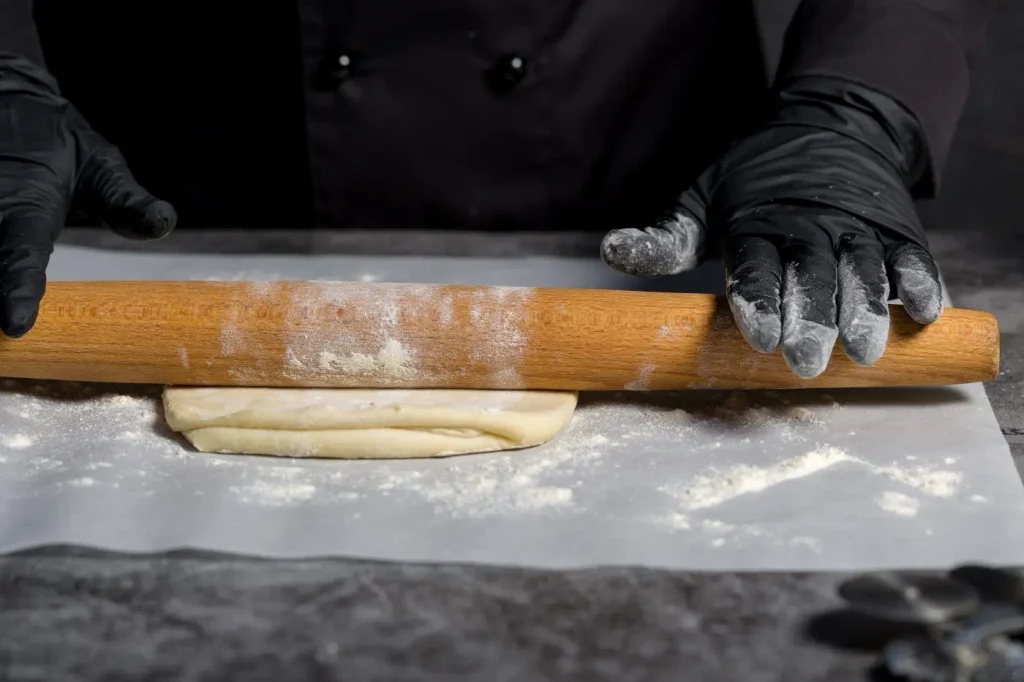
Why is temperature crucial in lamination?
During the preparation of puff pastry, it is important to maintain the appropriate temperature and consistency of the fat. The fat must remain firm enough to keep the layers separate, but also pliable enough to be rolled evenly.
If it is too soft, it gets absorbed into the dough and reduces the flakiness effect. If it is too hard, it can crack during rolling and disrupt the uniformity of the layers.
Preparation tip
Between the rolling and folding phases, cool and rest the dough as needed. This reduces the risk of layer cracking and facilitates further processing.
Application: Puff pastries with various fillings, strudels, savory pies, and bases for cream puffs.
Yeast dough: fermentation as the foundation of preparation
The main characteristic of yeast dough is the use of yeast, which produces gases during fermentation and allows the dough to increase in volume.
Depending on the recipe, the dough can contain approximately 50 – 60% liquid in relation to the weight of the flour, with adjustments for other ingredients.
According to the composition and quantity of additional ingredients, we distinguish between light, heavy and mixed yeast dough.
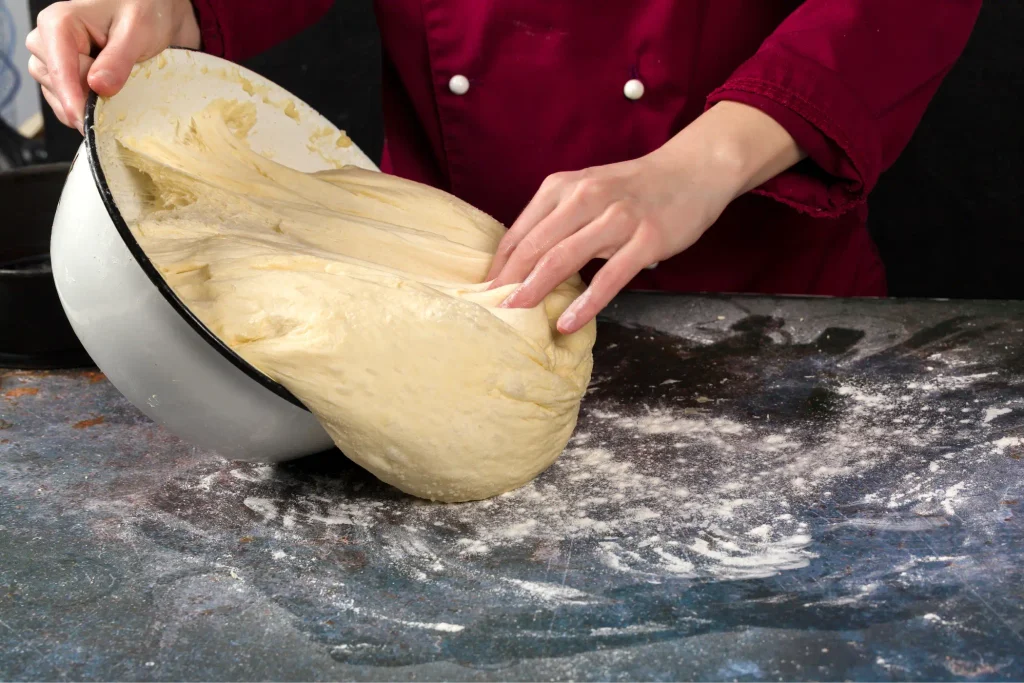
Direct and indirect mixing
In professional preparation of yeast dough, two basic mixing methods are used.
- Direct mixing
- All ingredients, including yeast, are added in the same process and mixed into the dough.
- Indirect mixing
- First, a pre-dough or preferment is prepared that ferments, and then it is added to the other ingredients during the final mixing.
Phases of preparing yeast dough
Regardless of the mixing method, preparing yeast dough involves several important steps:
Mixing → fermentation → shaping → final rising → baking or frying
During fermentation, the volume, structure and aroma of the dough develop. The duration of individual phases depends on the recipe, temperature and desired characteristics of the final product.
Preparation tip
Monitor the state and volume of the dough, not just the time indicated in the recipe. The temperature of the environment and the dough can significantly affect the speed of fermentation.
Application: Donuts, rolls, sweet dumplings, walnut rolls and poppy seed rolls.
In the recipe: Doughnuts with Lino Lada

Short yeast dough: a combination of yeast and fat
Short yeast dough combines the action of yeast with a higher fat content, such as butter, margarine or lard.
The fat contributes to softness, flavor, and a more crumbly structure, while the yeast allows the dough to be light.
Compared to classic yeast dough, the final product can have a more delicate and less elastic structure, depending on the recipe and preparation method.
Application: Walnut rolls, poppy seed rolls and other filled pastries.
Yeast puff pastry: when fermentation and lamination combine
Yeast puff pastry combines two principles of leavening:
- Biological
- through the action of yeast
- Physical
- through steam formation during baking
The role of yeast in the process
Yeast produces gases during fermentation that contribute to the volume, softness and characteristic flavor of yeast dough.
The role of lamination
During baking, water turns into steam, which helps separate the layers formed during lamination. The fat contributes to flavor and crispiness.
The result is a pastry with a crispy exterior and a soft, layered interior.
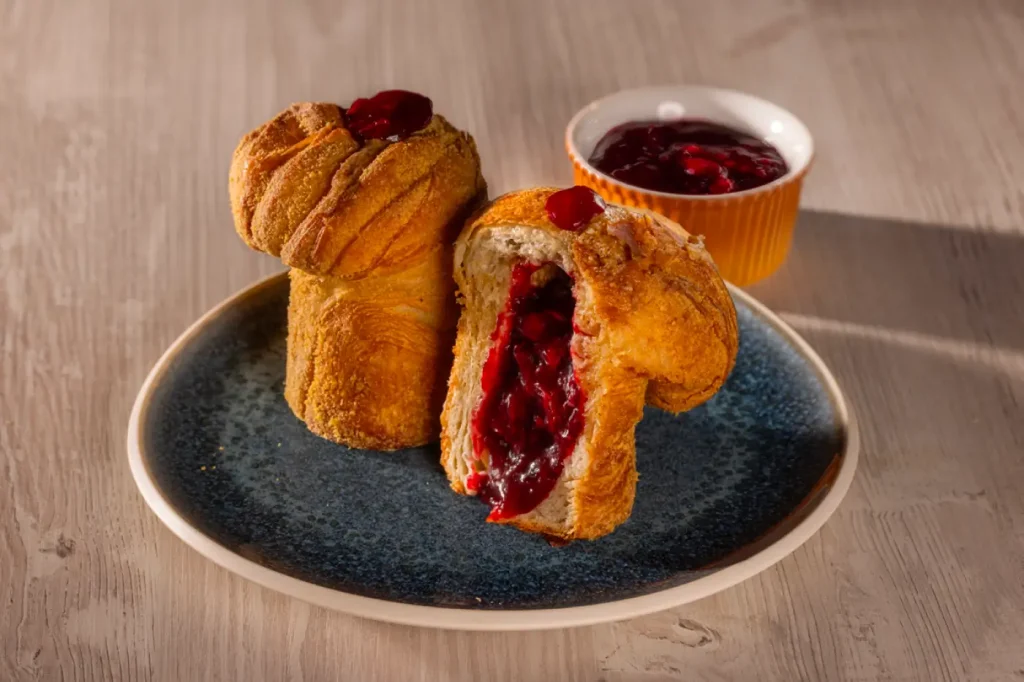
Application: Croissants, Danish pastries, cruffins, snail pastries and filled puff pastries.
Why is cooling especially important?
In yeast puff pastry, cooling between the rolling and folding phases is a crucial part of the process.
If the fat gets too warm, it can be absorbed into the dough, resulting in the loss of the characteristic flaky structure. If it is too hard, it can crack during rolling.
Therefore, it is necessary to align the temperature of the dough and fat and ensure appropriate resting time.
Which type of dough to choose
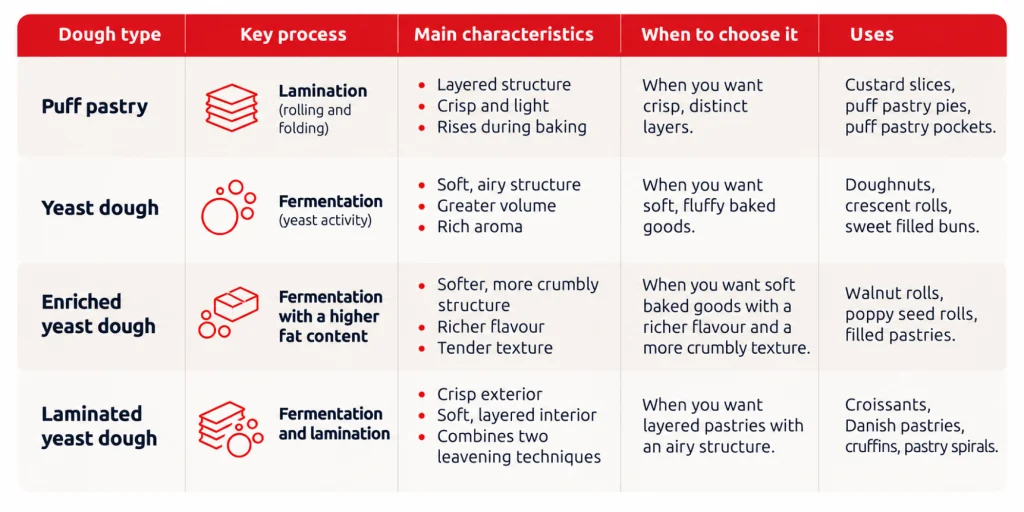
For all these doughs, the key factors are the correct mixing technique, temperature control, and sufficient resting or fermentation time. These processes ensure consistent quality and repeatable results in professional pastry production.
Literature: Šošić, Ružica and Bešlić, Saša (2023), Pastry 1, Osijek.