Vegetable cutting techniques: a guide to french cuts
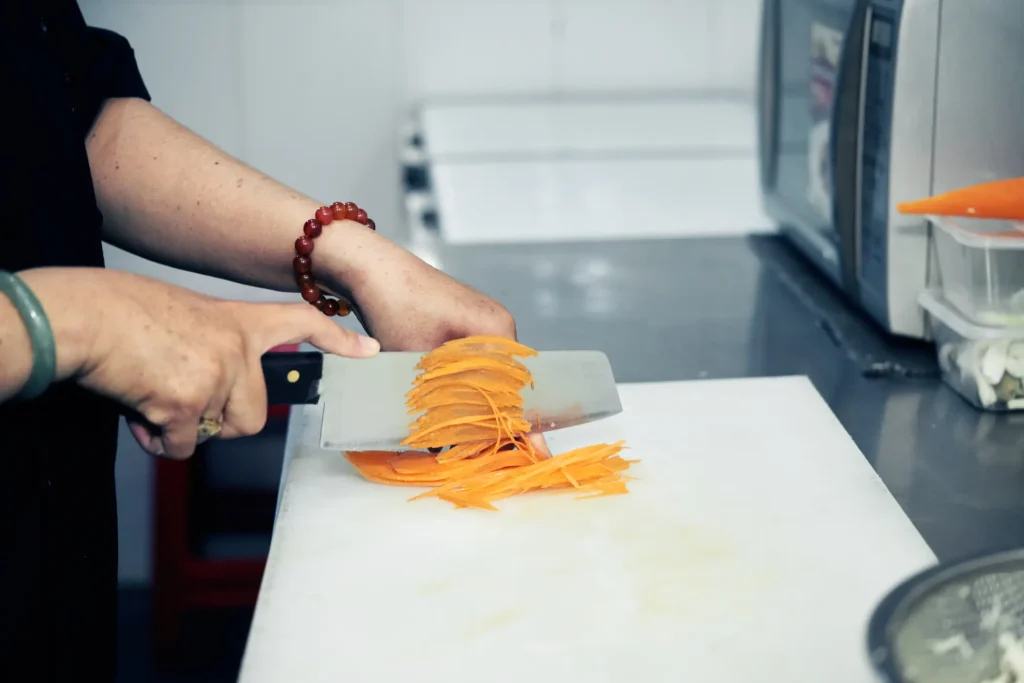
When vegetables in a dish are cut properly, it is recognized that a professional is behind it.
Besides looking nice and indicating that someone has dedicated serious attention to the dish, the size and shape of the cut vegetables affect the preparation of the dish itself. Among other things, they influence even cooking, texture and presentation, and help achieve uniform plates.
In culinary arts, numerous names are used for cutting techniques, most of which originate from French cuisine. What do julienne, brunoise, bâtonnet, or mirepoix mean and when is each cut used?
Podravka chef Ivan Bobinac provides an overview of the most important vegetable cutting techniques, their characteristics and applications.
Proper vegetable cuts: from thin sticks to small cubes
Among the most well-known French vegetable cutting techniques are cuts that yield uniform sticks and cubes of various sizes.
Julienne, brunoise, bâtonnet, macédoine, and jardinière differ in shape and dimensions, and the choice depends on the ingredient, method of preparation, and desired presentation.
Julienne: thin sticks
Vegetables are cut into thin, uniform sticks approximately two to three millimeters thick and about four to five centimeters long. It is often used for carrots, celery, and leeks.
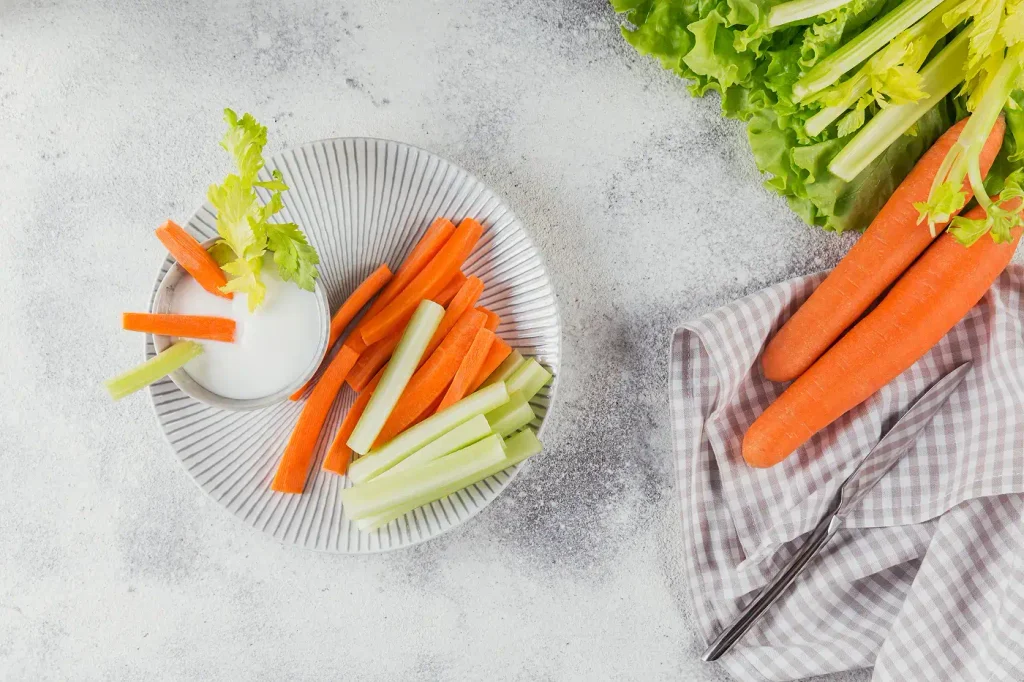
Bâtonnet: thicker sticks
A cut similar to julienne, resulting in slightly thicker sticks, approximately five by five millimeters. The length of the sticks is the same as for julienne, four to five centimeters. It is used for carrots, potatoes, and other firmer vegetables.
Jardinière: uniform vegetable sticks
A traditional French cut that produces uniform vegetable sticks. It is often used for vegetable side dishes and garnishes.
Brunoise: very small cubes
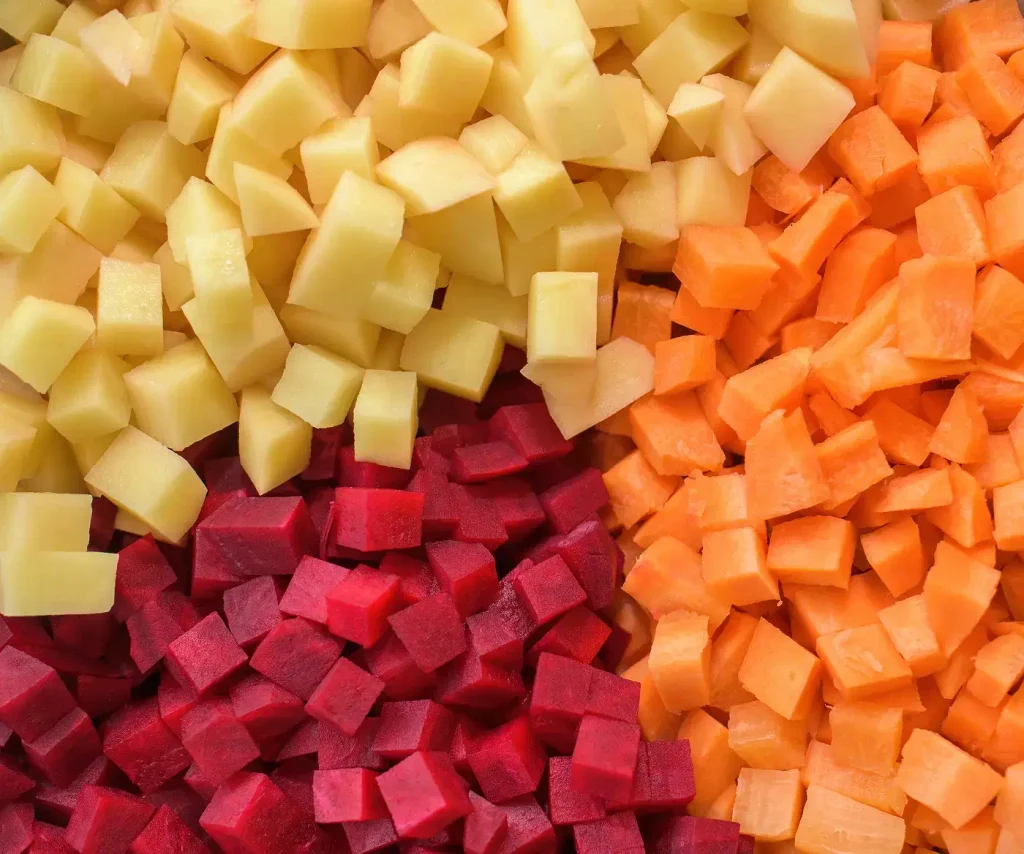
Vegetables are cut into uniform cubes approximately two to three millimeters in size. One way to prepare it is to first cut the vegetables into julienne, and then cross-cut the sticks into small cubes.
Macédoine: larger cubes
Unlike small brunoise, macédoine refers to larger cubes, usually about five to ten millimeters. It is used for preparing mixed vegetables.
Cuts for soups, stocks and sauces
When preparing stocks, soups and sauces, vegetables do not always need to be cut into small, uniform pieces. The shape and size depend on whether the vegetables will serve as an aromatic base or remain part of the finished dish.
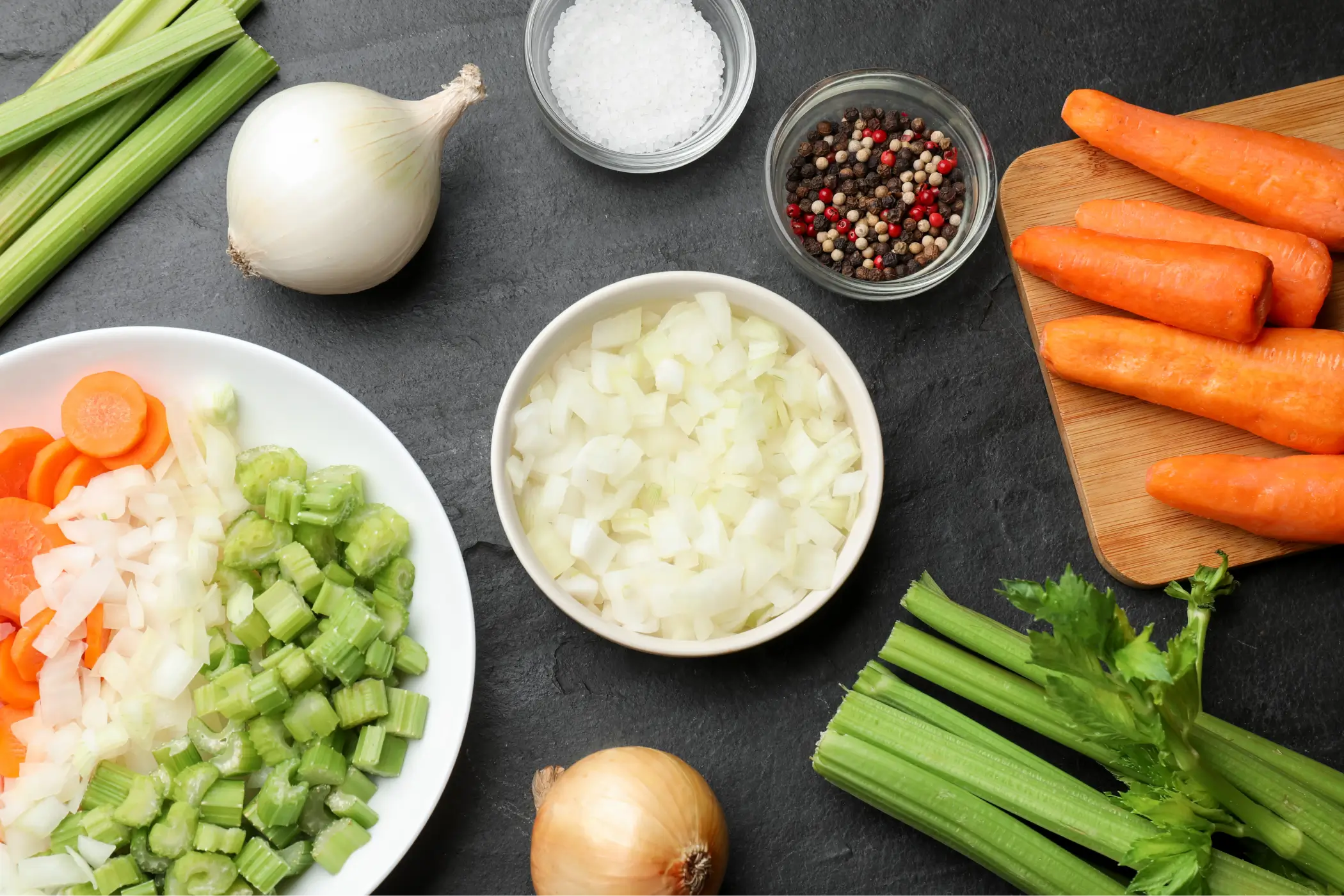
Mirepoix: coarsely cut aromatic vegetables
A classic French combination of onions, carrots and celery, cut into larger pieces. It is used as an aromatic base for stocks, sauces and stews.
Matignon: finely cut aromatic vegetables
Similar to mirepoix, but the vegetables are cut finer. Unlike vegetables used solely for flavoring the stock, matignon can remain an integral part of the finished dish.
Paysanne: thin flat pieces
Vegetables are cut into thin pieces of simple shapes, such as squares, triangles or half-moons. The cut often follows the natural shape of the ingredient and is used in soups and stews.
Rounds, diagonal cuts and tomato preparation
Not all cuts are intended to achieve uniform sticks or cubes. Depending on the ingredient and desired presentation, other shapes are also used.
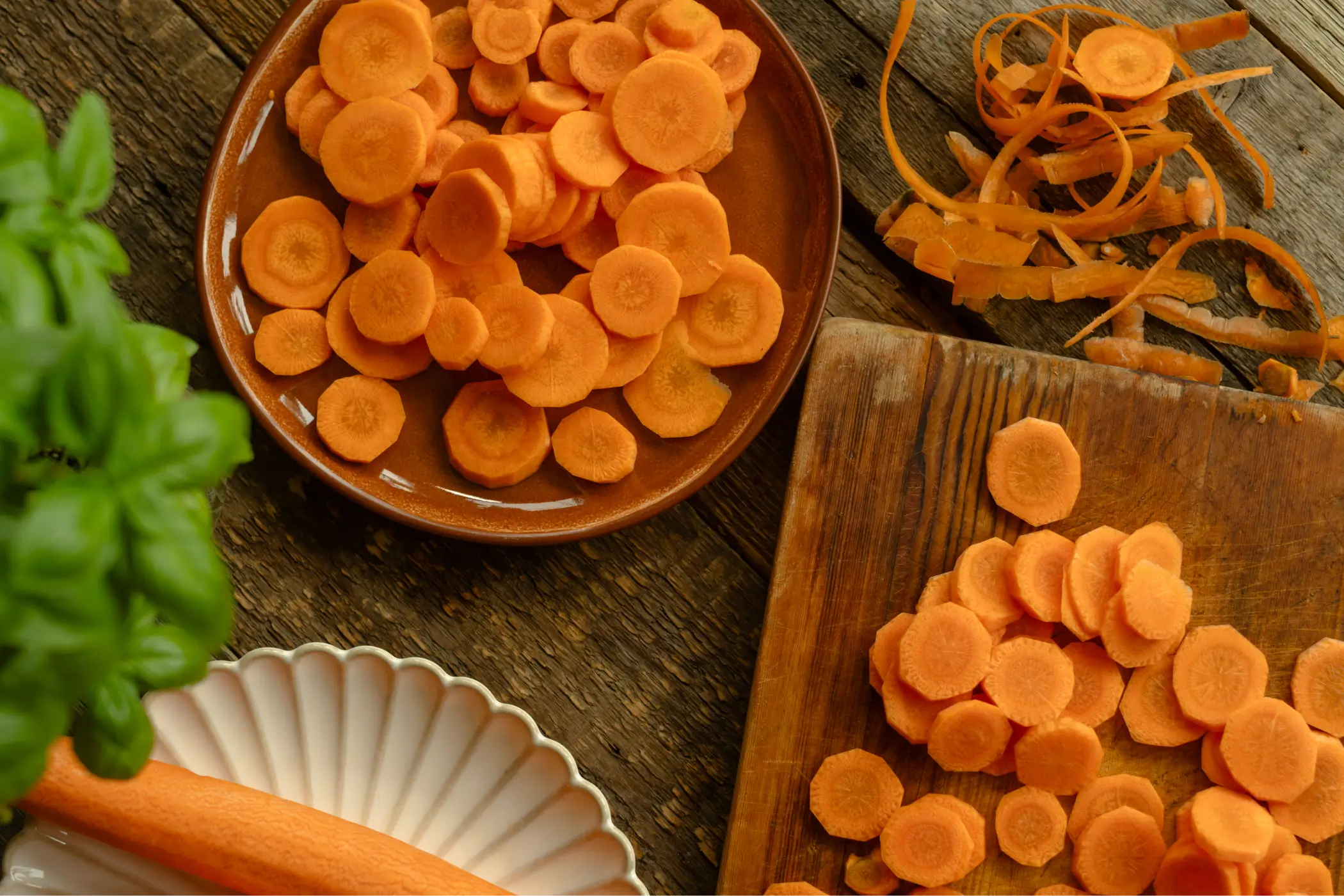
Rondelle: rounds
Cutting vegetables into thin or thick rounds. It is most commonly applied to carrots, cucumbers and leeks.
Oblique: diagonal cut
The ingredient is cut at an angle, resulting in elongated pieces with a larger cutting surface. It is used for carrots, celery and zucchini.
Vichy: uniform rounds
Carrots are cut into rounds of uniform thickness to ensure even cooking. This cut is traditionally used for preparing the French carrot side dish (à la Vichy), which is boiled or braised with butter, water and a little sugar.
Concassé: peeled and coarsely chopped
Most commonly refers to tomatoes that have had their skin and seeds removed, after which they are cut into pieces.
How to cut leafy vegetables and herbs?
For leafy vegetables, onions and herbs, techniques are used that yield thin strips, slices or very small pieces.
Chiffonade: thin strips of leaves
Leaves are stacked, rolled and cut into very thin strips. This technique is used for basil, spinach and cabbage.
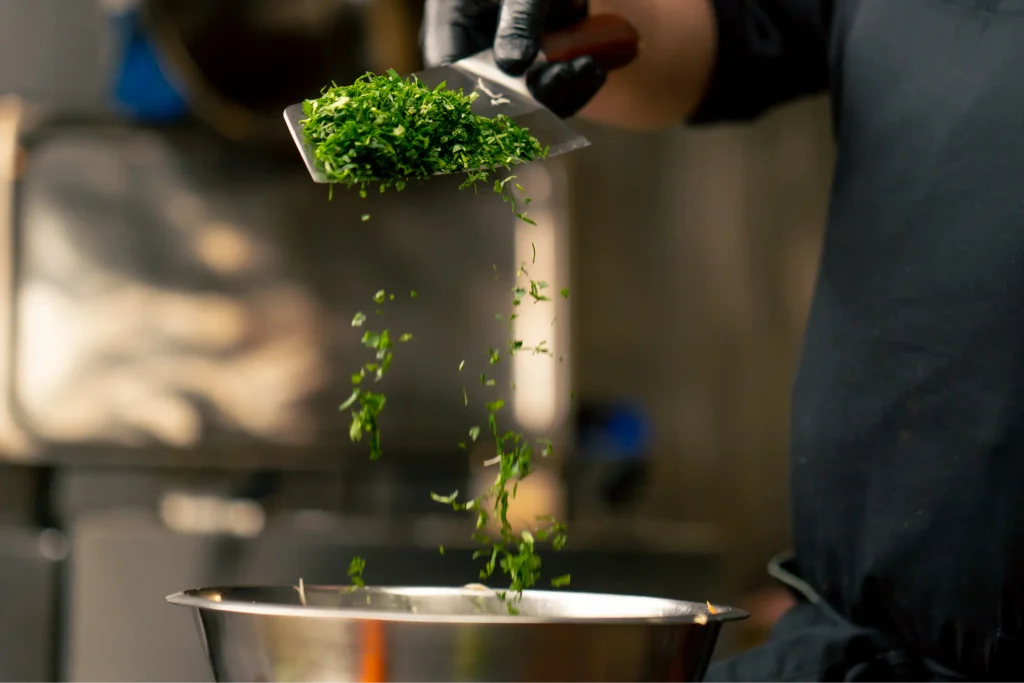
Ciseler: fine and precise cutting
Used for onions, shallots and herbs. The term ciselé describes very finely chopped ingredients.
Hacher: chopping
Refers to finely chopping with a knife, for example, parsley, garlic or other aromatic ingredients.
Émince: thin slices or strips
A cutting technique for thin slices or strips, often applicable to onions and mushrooms.
Why is uniformity of cuts important?
When preparing vegetables, it is not only crucial to know the French name for the cut. It is also important that the pieces are approximately the same size.
Uniform cuts allow for more even cooking and a consistent texture, while proper shapes contribute to a neat presentation of the dish.
Therefore, the choice of cutting technique should be adapted to the ingredient, method of preparation and desired result.
For stock, a coarser mirepoix is often sufficient, while for a dish where the shape and precision of the vegetables are an important part of the presentation, proper cuts like julienne or brunoise would be more appropriate.