A brief school of rice with chef Marija Bošnjak

Rice is the base of many side dishes, main courses, and desserts in a professional kitchen. When preparing daily menus, buffets, or perhaps deliveries, it is essential that the rice behaves the same way every time you prepare it. This means it should not turn into mush if that is not the plan, retain its shape, and be easy to regenerate. Podravka offers rice of various types and packaging (from three to 25 kilograms), so you can choose exactly what you need for your type of service. Podravka chef Marija Bošnjak informs us about all of this below.
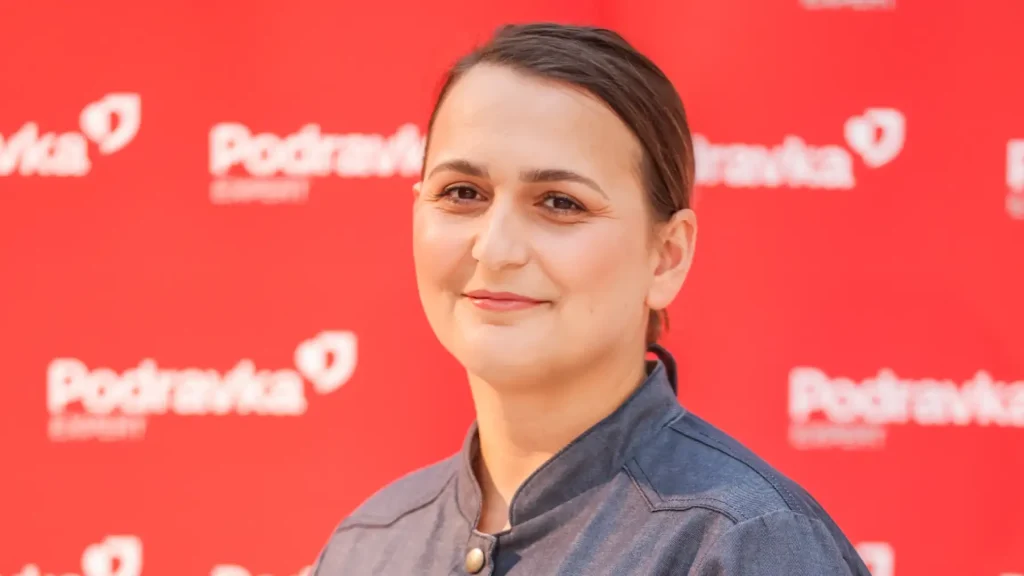
Do you need short, medium, or long grain?
- Short and round grain produces creamy, sticky rice that is ideal for risottos, desserts, and traditional spoon dishes.
- Medium grain is versatile. It is compact enough for sushi and puddings, but also fits well in wetter risottos or pilafs.
- Long grain rice remains fluffy and the grains are separate, making it a good choice for side dishes, pilafs, wok dishes, salads, and buffets.
In the Podravka assortment, all three options are available, so you can easily match the type of rice to your needs and serving style. Below, we will highlight all types of rice and their applications in dishes.
Parboiled rice
Parboiled rice undergoes a specific process in which the rice is steamed in its husk before being husked and milled. This process allows nutrients from the husk to be absorbed into the grain, so parboiled rice retains more vitamins and minerals compared to regular white rice. The result is firm grains that remain separate even after cooking, do not stick together, and withstand holding warm or regeneration (the process of reheating already cooked rice) well.
This structure is ideal for side dishes, pilafs, salads, and Asian wok dishes, where it is important for the rice to remain fluffy, clearly grainy, and visually neat. Within this category, we distinguish between parboiled long and medium grain rice, depending on whether you need a distinctly fluffy or slightly fuller structure on your plate.

Parboiled long grain
Parboiled long grain rice remains extremely fluffy after cooking, with separate, firm grains. In the Podravka assortment, you will find two offerings: Lagris offers a practical professional packaging of five kilograms for daily kitchen use, while Zlato polje in five and ten-kilogram bags brings a recognizable premium brand that guests already know from retail shelves.
They are an excellent choice for sides with meat, fish, and vegetables, as well as for pilafs where the rice must not be sticky, Asian wok dishes, fried rice, and cold salads where you want a fluffy texture and a neat plate.


Parboiled medium grain
Parboiled medium grain rice combines the firmness and separation of grains with a slightly fuller structure on the plate. After cooking, the grains remain separate and do not stick together, making it ideal for pilafs and sides where the rice needs to be fluffy, but also well absorb the flavors of spices and broth. It is also excellent for soups and stews, as it does not break apart and retains its shape, giving the dish a neat and appealing appearance.
Thanks to well-preserved nutritional values and ease of preparation, parboiled medium grain rice is a reliable choice when you need rice that remains stable even after holding or regeneration.

Arborio
Arborio is a short grain rice with a high starch content, which gives it a creamy texture when cooked, while the center of the grain remains slightly firm. It is the standard for risotto: it absorbs broth, wine, and butter excellently, and carries the flavor of what you add in the pan. Arborio is also excellent for rice-based desserts, such as rice pudding, where you want a rich, pliable structure.
Podravka’s Arborio rice in a three-kilogram package is practical for restaurants and hotels that regularly make risottos but do not want to handle overly large bags.
Preparation
Before cooking, rinse the rice, sauté onions in hot oil, add the rice and briefly sauté, then add liquid and cook covered on low heat for 16 to 18 minutes, stirring occasionally.
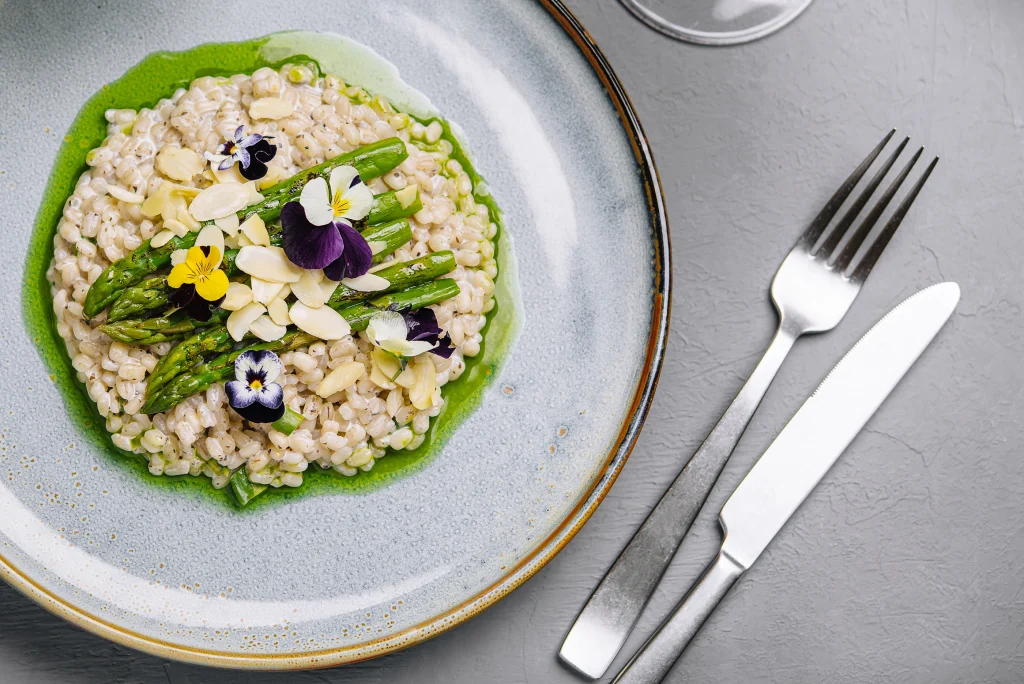
White medium grain rice
This type of rice, with a grain length that sits halfway between short and long grain, naturally tends towards a stickier and softer texture. This is its main difference compared to parboiled rice, whose grains are firmer, less sticky, and designed to remain fluffy and separate even after holding or regeneration.
When cooked, it becomes softer and slightly sticky. It is an excellent base for dishes where you want a fuller, moist texture. This is why it is used for sushi, where stickiness is key for shaping rolls. Additionally, it is ideal for desserts due to its ability to absorb milk and sugar well, in dishes such as rice pudding and other sweet dishes. In this sense, it also performs well in risottos, or dishes that require a softer, stickier texture.
Podravka offers it in a 25-kilogram bag for large kitchens (cafeterias, schools, hospitals) and in a five-kilogram package for restaurants with lower rice turnover but a wide variety of dishes.

Round grain rice
Round grain rice is short and round, with high stickiness and a creamy texture after cooking. This is the rice for dishes that require a thick, pliable consistency: risottos, rice puddings, milk-based desserts, and traditional spoon dishes where the rice needs to bind the ingredients. Thanks to its stickiness, it is also very suitable for sushi, where it is important for the grains to stick together and hold their shape when forming rolls.
Preparation
In professional kitchens, you can follow a ratio of 1:3 (rice : water) and a cooking time of 12 to 15 minutes, adjusting based on the desired texture.

We hope that with this information, procuring rice will be even easier for you. The Podravka Expert assortment is ready. Reach out to us with confidence.