How to reduce waste in a professional kitchen
Reducing food waste in a professional kitchen is the result of clearly established processes that connect planning, production, and control. Waste is not a coincidence, but a consequence of misalignment within the system – from procurement and organization of mise en place, to the way of serving and monitoring feedback from the dining room.
Experienced chefs have a lot to say about this, and our Branko Takač has compiled useful tips that will surely help you achieve minimal waste in the kitchen.
1. Start with the menu and realistic planning
The starting point is a well-planned menu and procurement aligned with the actual number of guests. A kitchen that orders based on actual consumption, rather than for every eventuality, automatically reduces excess ingredients and the risk of spoilage. Analyzing previous days, seasonality, and the type of service (buffet, à la carte, pension kitchen) should be the foundation of every order.
When decisions are based on data (the number of meals served, sales structure, best-selling dishes), rather than on intuition, it is easier to predict quantities and adjust planning. Especially during periods of seasonal fluctuations or larger events.

2. Standardize portions and weights
Standardizing portions is key to controlling both waste and cost. Every dish should have a clearly defined standard: the amount of protein, sides, sauces, and garnishes on the plate. This ensures a consistent guest experience and makes cost management easier.
Regularly monitoring leftovers on plates provides concrete insight into whether portions are too large or the dish is not suited to the guest. If the same component is consistently returned, it is a signal for correction – smaller weights, changing sides, or adjusting recipes – and not something to be ignored.
3. Utilize the whole ingredient
There is great potential for reducing waste by using the whole ingredient. A professional kitchen does not view raw materials through the lens of “waste,” but rather as opportunities. Roots, leaves, bones, and meat trimmings have their functions – stocks, soups, sauces, purees, or additional components of dishes.
This way, usability increases, waste decreases, and at the same time, greater depth of flavor is achieved. The guest may not be able to explain why the dish is richer, but they can feel the difference – which contributes to the perception of quality in the long run.
4. Implement organized reuse of leftovers
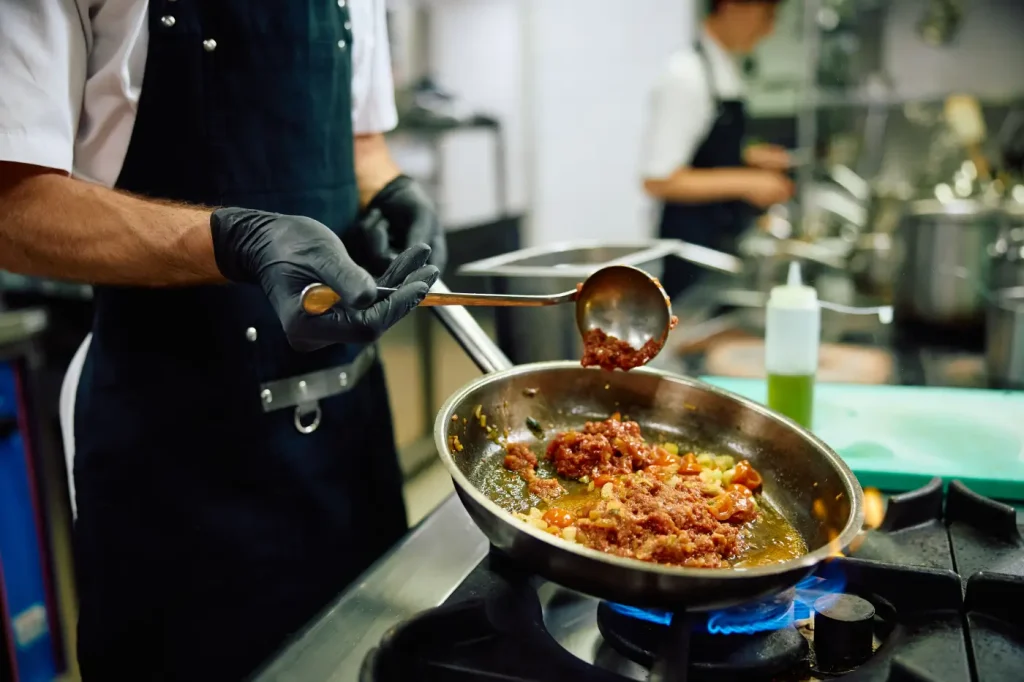
Organized reuse of production leftovers further reduces losses, but it must be systematic and controlled. Leftovers that are properly prepared, quickly cooled, and correctly stored can become new dishes: daily soups, stews, fillings for quiches or savory pies, sandwiches, salads, or frittatas.
It is crucial to have a plan in advance: what can be reused and within what timeframe, how it is labeled, and how the expiration date is monitored – while adhering to HACCP rules, deadlines, and temperature regimes.
Without clear rules and adherence to safety standards, the reuse of leftovers can easily shift from optimization to risk – which is unacceptable in a professional kitchen.
5. Establish a storage and inventory control system
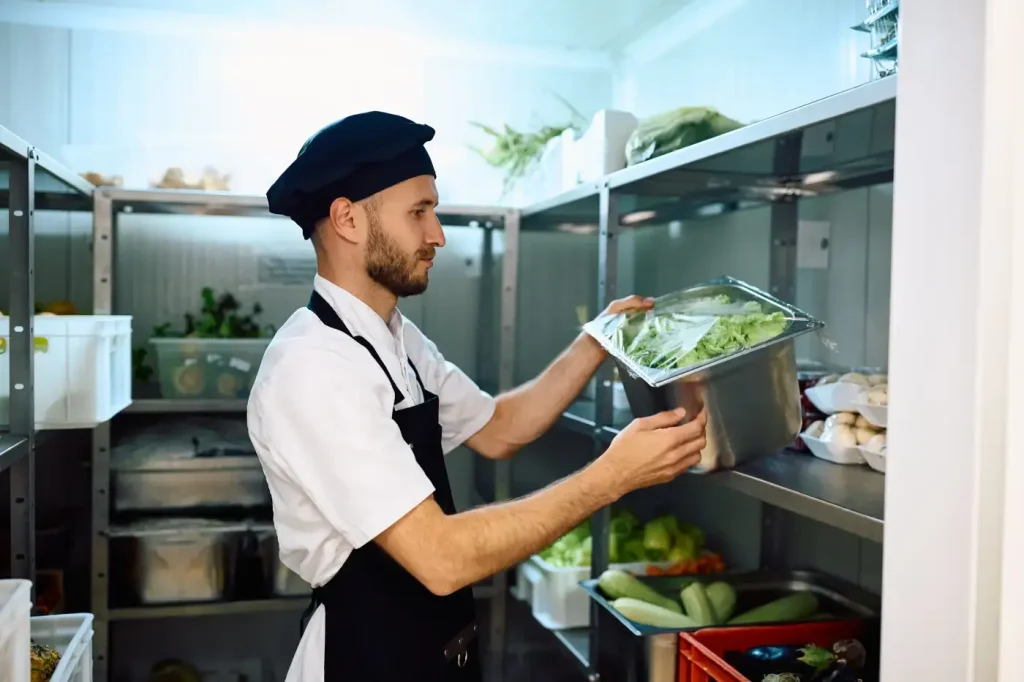
Proper storage is often a thin line between order and chaos. Every ingredient must be labeled, dated, and stored at the appropriate temperature and location. Applying the “first in, first out” (FIFO) principle ensures that older stock is used before new and reduces the chance of products being forgotten in the refrigerator.
Well-organized cold and dry storage areas facilitate inventory, speed up work, and make spoilage an exception rather than a rule. Additionally, clear rules about maximum stock levels per item prevent the accumulation of goods that the kitchen realistically cannot consume in an optimal timeframe.
6. Waste reduction as a mindset
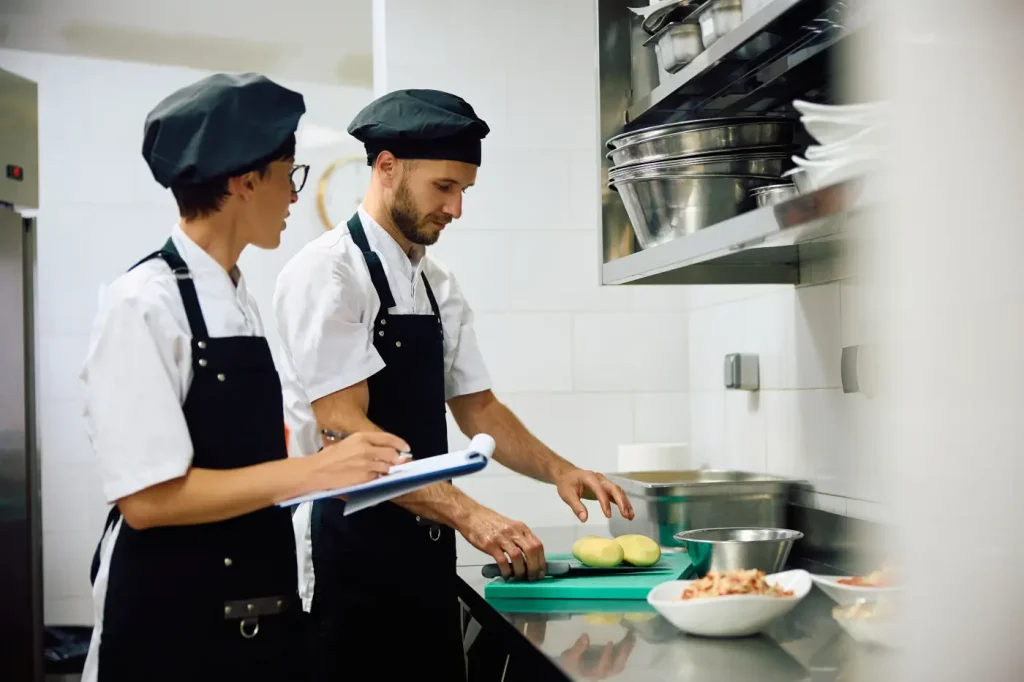
When all these elements are connected, the kitchen shifts from a reactive to a planned mode of operation. Less is thrown away, ordering is more precise, and the team works more calmly because they have clear frameworks and procedures.
Waste reduction is not an additional task but a mindset. It is embedded in every step of the process, from ordering and receiving goods, through preparation and cooking, to serving and analyzing guest feedback.
Quick checklist for the chef
These five questions can serve as a quick diagnostic tool. If the answers “yes” are too frequent, you probably have room for waste reduction:
- Are the same components or sides returning from plates in visible quantities from service to service?
- Do you regularly have products in the refrigerator that are nearing expiration?
- Are you ordering individual ingredients just in case, without clear sales analysis and actual consumption?
- Are you using the whole ingredient (bones, roots, leaves) or are you often throwing them away without a prior plan?
- Are there clear, written rules in the kitchen about how and when prepared food leftovers and semi-finished products can be reused?
If you recognize yourself in these questions, it doesn’t have to be bad news. It simply means that with relatively simple adjustments to the process, you can simultaneously reduce waste and costs, with greater control over the kitchen’s operations.
Contact us for help with planning and ordering.